
RFP Presentation: How to Prepare, Structure & Win More RFPs
Learn what an RFP presentation is, when it’s required, how to structure it, and best practices to deliver a compelling, evaluator-focused presentation.

Robert Dickson
RevOps Manager, AutoRFP.ai··10 min read
An RFP presentation is often the real final round, even if nobody calls it that. You are not just walking through slides; you are defending your approach, calming risk, and proving your team is the safest choice in a room full of internal skeptics.
The difference between “great proposal, but…” and “let’s move forward” is usually how well you show you understand the problem and can deliver.
This article explains what an RFP presentation is, where it fits in the overall RFP process, and the most common types of RFP presentations you might be asked to deliver.
It also covers a step-by-step guide to preparing an effective RFP presentation that stands out and builds buyer confidence.
You’ll learn why the presentation often decides the winner even when written responses look similar, and how to maximize your RFP response success with an RFP automation tool.
What Is an RFP Presentation?
An RFP presentation is a live or recorded session where shortlisted vendors present their proposed solution, approach, and team to the buyer after submitting a written RFP response.
It gives decision-makers a chance to validate what was written, assess fit and credibility, ask follow-up questions, and see how well the vendor understands their problem.
In many RFPs, this stage is where similar written proposals are separated by clarity, confidence, and execution.
Where the RFP Presentation Fits in the RFP Process
The RFP presentation occurs in the final evaluation stage of the RFP process, after written proposals are scored and a shortlist is confirmed, but before the final vendor selection and contract award.
Placement in the RFP Timeline
Here is a breakdown of where the presentation fits in the process:
| RFP timeline stage | What happens |
|---|---|
| Preparation & issuance | The buyer defines the requirements and evaluation criteria, then issues the RFP. |
| Submission & review | Vendors submit written proposals covering solution, pricing, compliance, and timelines. |
| Shortlisting | The buyer scores written responses and selects finalists for deeper evaluation. |
| Presentation (Finalist step) | Shortlisted vendors present their approach, walk through the solution, and handle live Q&A (often paired with a demo). |
| Final selection & contracting | The presentation influences final scoring, references, risk checks, negotiation, and the award decision. |
Purpose of an RFP Presentation
The presentation stage exists to reduce pre-award risk by surfacing gaps early.
| Why does this stage exist: | What it helps the buyer do: |
|---|---|
| Validate the proposal live | Stress-test your claims and confirm that the team tells one consistent story. |
| Compare finalists side by side | See how each vendor thinks, communicates, and prioritizes. |
| Evaluate the delivery team | Check that SMEs, delivery leads, and exec sponsors are aligned and credible, not just the bid document. |
| Reduce pre-award risk | Surface gaps early (scope, timelines, integrations, security, change management) before signing. |
| Confirm execution reality | Understand how you’ll deliver, the tradeoffs you’ll make, and proof you’ve done it before. |
“Vendor presentations don’t just echo the paperwork.” They can rescue weak bidders, expose weak claims, or introduce game-changing ideas.” – Anthony Ibekwem, IT Procurement Consultant at 4C Associates
Types of RFP Presentations
These are the standard types of RFP presentations buyers run, so you can prep for the right format.
1. In-Person Presentations
In-person sessions show up when the stakes feel high, and stakeholders want a stronger read on the people behind the proposal. Face-to-face makes it easier to judge executive commitment, team chemistry, and how calmly your delivery leads handle pressure in the room.
Side note: If the room is split between decision-makers and “influencers,” plan a 30-second version of every key point so it lands fast with both groups.
2. Virtual Presentations
Virtual formats are common when speed and access matter more than “room presence,” especially with reviewers spread across locations. The evaluation tends to reward clarity, tight structure, and disciplined Q&A more than charisma.
3. Pre-Planned Presentations
Pre-planned sessions are used when the evaluation needs to be clean and comparable across finalists. A structured flow helps stakeholders score vendors fairly against the same criteria because everyone covers requirements, approach, timelines, and risks in a predictable order.
4. Ad Hoc/Short-Notice Presentations
Short-notice sessions usually happen late-stage when specific concerns need resolving, not a full re-pitch. These are essentially risk-reduction checkpoints to clarify gaps, validate assumptions, and test responsiveness before award.
Pro tip: For ad hoc formats, bring a short “core narrative” (problem → approach → proof → plan) you can repeat consistently.
5. Demo-Based Presentations
Demo-based sessions are chosen when the core question is “Will this work in our workflow?” A live walkthrough helps confirm feature fit, usability, integrations, and what’s real vs. slide-based, and is especially useful for technical or software-heavy RFPs.
What to Confirm Before an RFP Presentation
This is what you should lock in upfront to avoid surprises on presentation day.
| What to confirm | Why it matters |
|---|---|
| Session purpose and what will be scored | Aligns your story to the decision and evaluation criteria. |
| Attendee list and decision roles | Tailor the depth, proof, and who answers what. |
| Timebox and Q&A format | Prevents overruns and keeps answers consistent. |
| Must-cover questions and demo scenarios | Avoids compliance misses and shows the right proof. |
| Top buyer risks and decision timeline | Targets objections and sets up the next step. |
| Win themes are defined (3-5) | Keeps the story consistent and persuasive across slides and speakers. |
| Format is confirmed (in-person, virtual, or hybrid) | Ensures the right setup, pacing, and engagement plan. |
| Primary speaker and rehearsal plan | Protects flow, transitions, and a clear, client-centric message. |
How to Prepare an Effective RFP Presentation (Step-by-Step)
Here’s how to prep your RFP presentation from start to finish, so you walk in aligned, credible, and in control.
Step 1: Confirm the Decision Context, Scoring, and Success Criteria
Lock what the buyer is deciding in this session, how they’ll score it, and what “good” looks like. Teams that align early tend to convert to a shortlist far more often
Evaluation criteria and weightings: What they’re scoring, what’s pass/fail
Stakeholders and priorities: Who’s in the room and what each role cares about
Clear problem framing: What’s driving the RFP and what’s at risk if it fails
Success criteria: Outcomes/KPIs the buyer wants (not feature checklists)
Format constraints: Time, Q&A expectations, demo/no demo, what you can share
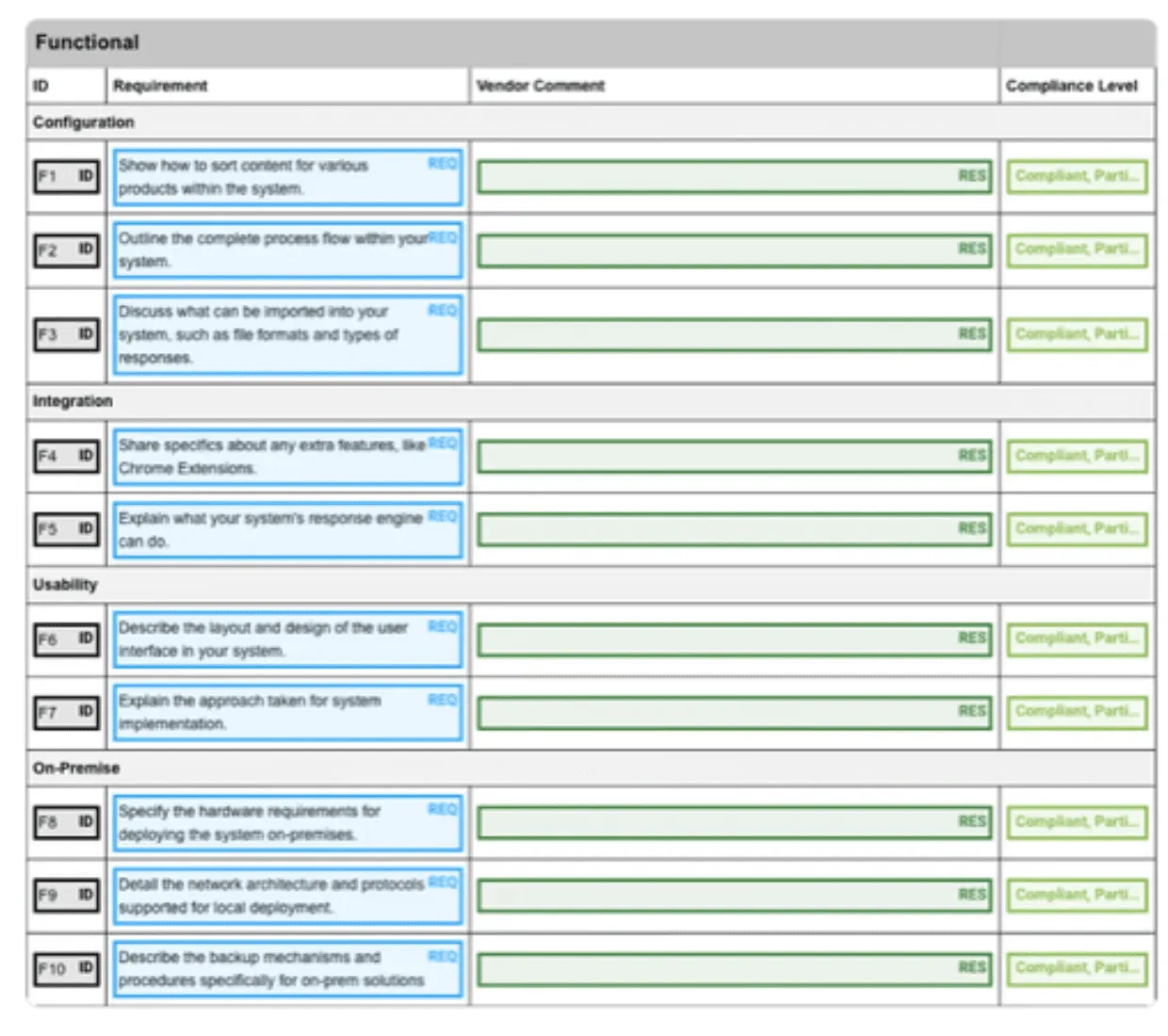
Pro tip: Upload the RFP to an RFP automation tool like AutoRFP.ai and quickly extract the key requirements and compliance checkpoints, so your prep starts with what’s being scored.
Step 2: Build a Customer-Insight Brief That Anchors the Talk Track
Your presentation should sound like it was built for this buyer, not adapted from your last deck. Mature teams don’t wing this, and roughly 88% have a defined customer-insight process.
Buyer reality: Constraints, timelines, internal pressures, decision drivers
What they care about most: Top priorities and tradeoffs (speed vs risk, cost vs scope)
What they fear: Delivery failure, security gaps, adoption issues, stakeholder pushback
What you’ll prove: The outcomes you’ll commit to and how you’ll show credibility
Stakeholder priorities: Finance cares about ROI and risk; IT cares about security and integration; ops cares about rollout reality
What will differentiate a winner: Where they reward confidence and specificity?
Step 3: Build the Storyline and Differentiation (Mapped to Evaluation Criteria)
Convert your insight into a crisp “why you” narrative that matches the scoring model.
3-5 win themes (one-liners): “Because you need X, we’ll deliver Y, proven by Z”
Crisp differentiation summary: Map each differentiator to a specific evaluation criterion
Address alternatives indirectly: Emphasize your strengths and proof with no vendor-bashing
Proof-ready claims: Results, references, timelines, case outcomes tied to buyer priorities
Step 4: Draft the Implementation Plan (So It Feels Real, Not Theoretical)
Buyers use presentations to test the execution reality. Bring a plan that’s easy to validate.
Phases: Discovery, onboarding, configuration, rollout, adoption, steady-state
Timeline: Realistic milestones, dependencies, and what you need from the buyer
Onboarding approach: Training, change enablement, stakeholder communications
Governance: Cadence, roles, escalation, reporting, success checks
Step 5: Assign Sections to the Right People, While Keeping One Unified Message
Split speaking roles for credibility, but keep one voice so it doesn’t feel stitched together.
Assign by credibility: Delivery lead for rollout, security lead for risk, exec sponsor for partnership/accountability
Name a narrative owner: One person controls consistency and final wording
Agree Q&A lanes: Who answers what, who handles pricing, who handles scope/risk
Keep transitions clean: No contradictions, no repeated slides, no “I’m not sure” moments
Step 6: Validate Risk and Mitigation (Security, Delivery, Change Management)
Make risk handling explicit. Buyers often default to the vendor they feel safest with.
Security: Controls, data handling, compliance posture, auditability
Delivery risk: Resourcing, timeline risks, handoffs, change requests
Change management: Adoption risks, training, internal comms, resistance points
Dependencies: Integrations, buyer responsibilities, and assumptions that could block delivery
Mitigation plan: What you do, when you do it, and how you’ll track it
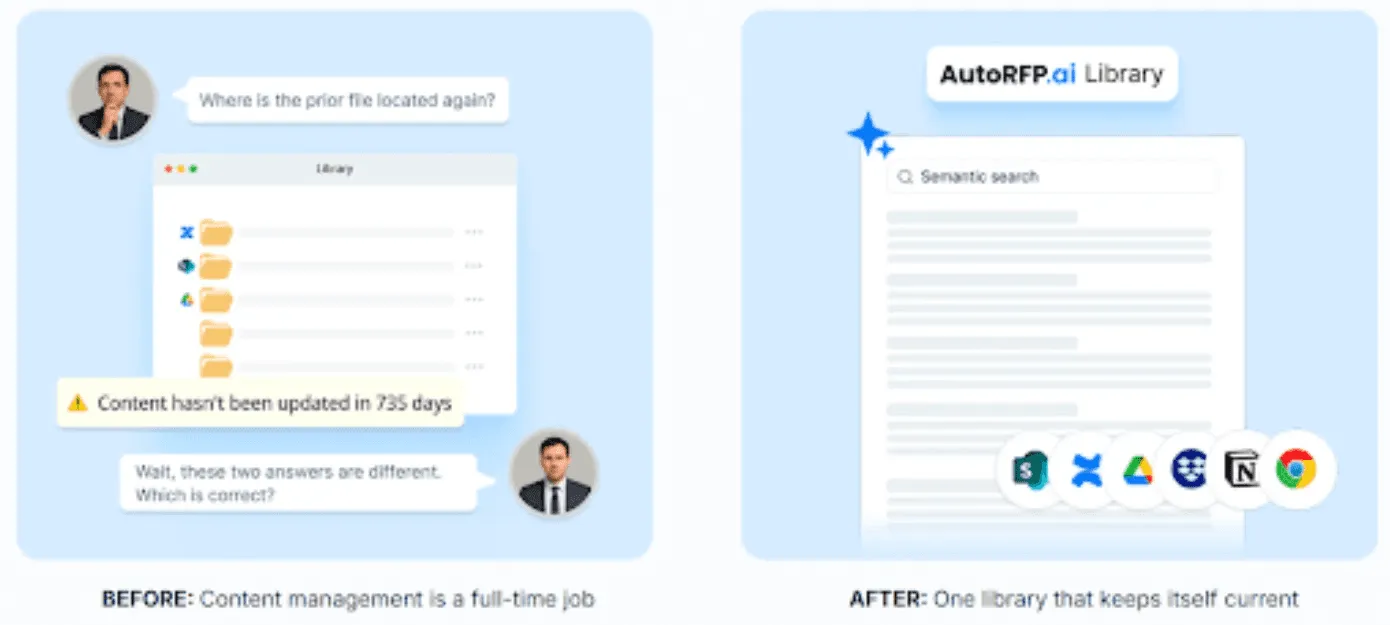
Pro tip: If you need to verify mitigation claims fast, use AutoRFP.ai’s semantic search to pull the latest security, policy, and implementation artifacts instantly from a centralized content library, so your mitigation claims stay current without manual library upkeep.
Step 7: Confirm Commercials and Assumptions (What’s In, What’s Out)
Presentations often surface commercial misunderstandings that kill deals late. Remove ambiguity now.
What’s included vs excluded: Scope boundaries, optional add-ons, support levels
Key assumptions: Volumes, users, integrations, timelines, buyer-provided inputs
Constraints: Procurement rules, legal terms, security constraints, implementation windows
Pricing logic (high-level): How the commercial model maps to outcomes and risk
Step 8: Rehearse for Reality, Build Rapport, and Follow Up
Run a Q&A drill: Hard questions, tradeoffs, “what could go wrong,” “what’s plan B?”
Be human and engaging: Build rapport, show genuine enthusiasm, keep energy up
Keep answers direct: Answer first, then add context (no wandering)
Close with next steps: Timeline, decision path, what you’ll send after
Follow up promptly: Send a thank-you note the same day, along with any requested details and a brief recap of decisions and next steps.
Why RFP Presentations Decide the Winner
RFP presentations can tip the outcome because they change how evaluators feel about the decision, not just what they know.
They create confidence cues: Buyers look for clarity and composure under pressure to reduce decision anxiety.
They make your story memorable: A clear narrative and a few proof points are easier to repeat in internal debriefs.
They show how you handle gray areas: Buyers watch how you clarify assumptions and make tradeoffs without getting defensive.
They surface “fit” signals: Responsiveness and working style often decide close calls more than features do.
They equip an internal champion: The buyer leaves with ready-to-use language, proof, and structure to win approval.
Maximize RFP Response Success with AutoRFP.ai
In the final round, buyers are scoring risk, clarity, and execution, not just slides. AutoRFP.ai is an
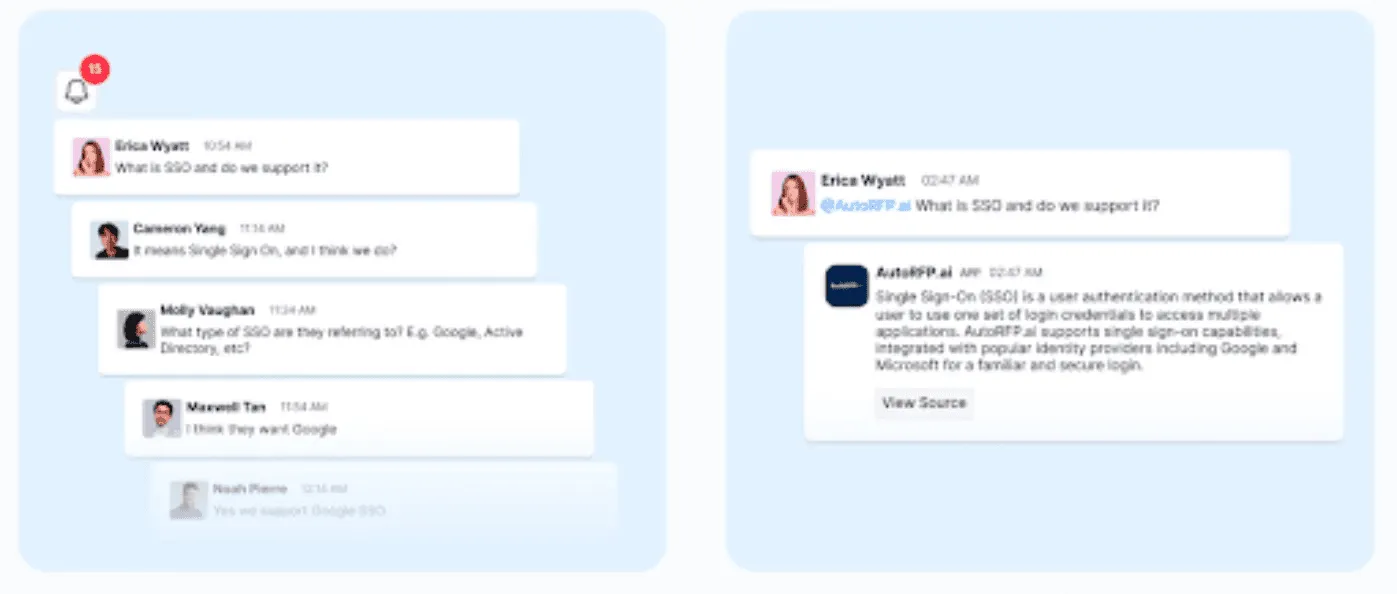
AI-first RFP response platform that not only creates on-brand RFP drafts but also keeps your prep grounded in what’s being evaluated: pull requirements and compliance checkpoints quickly, retrieve up-to-date proof via semantic search, and answer surprise questions with an AI Q&A bot. Make the presentation feel controlled.
