2026 Bid Management Process: Advice, Solutions & More
Step-by-step guide to bid management process in 2026. Learn how to streamline bidding, reduce errors, and boost your success rate.

Robert Dickson
RevOps Manager, AutoRFP.ai··7 min read
Another 800-requirement RFP just landed in your inbox with a two-week deadline.
Your team is already stretched across three other opportunities, and everyone’s wondering how you’ll pull this off. Successful bid management in 2026 often comes down to how you structure your approach.
This guide walks you through the complete bid management process that winning teams follow. You’ll discover how to structure your approach, avoid common pitfalls, and leverage modern tools that make bid responding faster without sacrificing quality.
What is Bid Management?
Bid management is your systematic approach to pursuing and winning business through competitive tenders opportunity.
It’s the framework that takes you from identifying an opportunity to submitting a response that addresses every requirement with precision.
Since RFPs now influence over a third of B2B company revenue, refining your bid management process, and using purpose-built Bid Management Software to automate the repetitive steps, directly impacts your growth potential.
It coordinates your team, manages documents, ensures compliance, and develops responses that prove why you’re the better choice. With a structured approach, you’re not just reacting to opportunities but strategically selecting which ones deserve your attention.
Complete Step-by-Step Bid Management Process
The bid management process follows seven phases that successful teams execute consistently.
Each step builds on the previous one, creating momentum that transforms scattered efforts into winning responses.
Step #1: Opportunity Identification and Qualification
Your journey starts with selecting opportunities where you have a genuine shot at winning. Understanding the tender bidding process is critical at this stage, as it helps you evaluate which opportunities align best with your team’s strengths and resources.
You need visibility into tender process platforms, industry portals, and procurement forecasts. Setting up alerts based on your criteria (e.g industry vertical, contract value, geographic region) ensures you never miss relevant opportunities.
Engage with prospect clients before they go to tender or RFP. Capture management and pursuit are well regarded disciplines to identify, engage and capture opportunities where you influence an upcoming bid.
Step #2: Bid/No-Bid Decision Making

Video transcript
Transcript is auto-generated and may contain minor errors.
Hey, have you ever wanted to use Gemini for your AI go no go analysis? We're going to jump into it today using Gemini to do our tender analysis to understand if we want to bid on this tender or not. I'm going to be using Gemini Flash 2.5 Pro which currently available on the paid Gemini plan. Uh, and we're going to be looking at a tender actually from the Australian government. Uh, so this one specifically is the ATO, the Australian Tax Office. And interestingly enough, this tender is for a coding assistant. So like an AI coding software SAS application. I use an AI coding SAS application that I love to use every day and that's cursor. So we're going to look at cursor who have an enterprise plan. So making a pitch for the likes of the ATO's and we're going to look at this publicly available atto tender and
whether cursor should bid on it. So we're going to be using our AI go no go analysis tool with Gemini. So let's jump into it and and wait until the end because the results of the AI go nogo analysis may actually surprise you. So, first of all, um I've got this prompt, and I'm going to leave a Google doc uh or page where you can download this uh prompt and then customize it for your business down in the description below. Uh but of course, um you know, I you can customize to your heart's content. When we're prompting, it's really important to a make it contextual to our business, which is where we have the inputs here. So, I'm going to enter the cursor URL. Uh we have our persona. So effectively that's telling the Gemini flash 2.5 what you know what kind of uh person is going to be what skill set should it have what context should it have when it answers this question in this case it's an expert RFP manager uh then we have
our context and objective so what are we asking the prompt effectively to do what are the instructions and then what should the output be so from this case I want a comprehensive document detailing against my red flags or amber flags or green flags around whether cursor should bid on this tender or not. So, I'm going to just, you know, copy and paste that prompt, chuck it in here. Then, uh, really cool thing is I'm actually going to turn on deep research. So, deep research is a tool readily available in a lot of your uh common LLMs whether that's uh Gemini as I'm showing here, Chat GPT or Claude. Gemini's deep research can be used not only to search the web but also search your documents. So, with Gemini, you can upload up to 10 documents. And for this, I'm actually going to be using my own go nogo
template. The go no-go template. Again, I'll chuck a link in the description below where you can download that from our website at autoirfp.ai/d downloads, but effectively this will have information. And this is my go no-go framework. What I'd recommend is downloading the template, changing the go no-go framework uh to make it more relevant for your business as needed. But it's a good starting point. Uh for for instance, this really focuses on RFP origins and relationship. uh it looks at resource requirements from our team and then effectively it gives you a scoring matrix and depending on that scoring matrix matrix should tell me whether we should proceed or not uh as well and it has all the different information you can like play around with your hearts content it's just an Excel spreadsheet um but really useful for your go no-go decision framework all righty so jumping back uh I've turned my deep research on and now I'll upload my documents from drive. And so
here are my tender documents. Uh just clicking shift, I'm just going to select all the relevant ones. I can only upload maximum of 10 documents. So I'm actually going to upload the original tender documents, not the indenments. We'll up upload those later. So I'm going to insert those documents. And there's one other document I want to add from my drive. And that actually is that go no-go decision template. So now I have my go no-go decision template. I've got my atto documents uh for the tender and I've got my prompt of what I want Gemini Flash 2.5 Pro to do for my AI go no-go analysis strap in it's pretty cool what you're actually going to see here as well all my tender documents and it's deep researchers on but before I submit this I want to make sure here in the prompt that you can download below is I'm going to update this information so uh tender documents uh see attached As you can see, I've attached them. And in terms of the company URL, well, here
I just want to make sure I I'm just going to enter cursor here. This is a AI coding assistant tender for the Australian tax office. And you know, in this example, we're being cursor. I do not work at cursor. I work at autofp.ai. But for my example, I click submit. And then what I really like about Gemini is it's going to provide a research plan for my AI go no-go analysis. So with that plan, it'll provide a lot of details in terms of the steps it's going to take to try to answer my prompt. And then I can actually edit that plan if I'd like to. And here we have our plan from Gemini. So clicking through I can go through I can read this information. First it's going to browse the cursor docs and all the information regarding cursor. It's going to go and analyze all the tender documents and then it'll make its way through and start to answer my go no-go questions. So, what I recommend here again is a edit the analysis template, the go no-go decision
template. Make that really relevant for your company and when you decide to bid or not to bid for tenders uh and RFPs. And then second is uh in this prompt, make sure you update what questions you're asking. if there's any specific questions like red flags you want for cursor. It might be well cursor doesn't do uh on premise hosting. So want to make sure that's flagged and then uh there's the information and then I can click start research and Gemini flash is going to start doing our AI go no-go analysis. All righty. I've given it some time. time it probably took oh jeez uh maybe about 10 minutes all up which is what you expect for the deep research uh especially for something that goes through you know 10 different tenor documents probably hundreds of pages and uh uses the organizational context that we provide it in the website of cursor to then run a go nogo analysis against that go no-go decision template. So jumping into it, uh before I show kind
of the output, what you have here for deep research is you can look at the thoughts. And so this kind of explains or at least in some cases LMS do hallucinate their thoughts, but in this case we can hopefully trust it and see that what it kind of looked to and what it did uh in completing that analysis. So it looked at the different websites. It then uh looked at the research uploaded folder files and then use that against the decision template to then try to provide an overall go no go as well. Here are the sources it used. Again, it can refer to those Google Drive documents I provided which is really powerful for that Gemini has such a good integration. Obviously, probably no surprise with Google Drive. And then scrolling up here is our analysis. So Gemini has provided an AI go nogo analysis based off the ATO tender documents for an AI coding assistant which we've mocked up as cursor.com to
reply and say should we bid on this where AI go nogo is powerful is it does help with that cursory first look whether this is worth it to look what information should I understand before diving to it further um as well certification gaps um you know goes through all the different information there and effectively it's going through that spreadsheet the decision template that we have for our go no-go analysis you can see here strategic alignment competitive landscape commercial viability legal and security and it's now providing that information there as well so it's it's kind of looked over those different clauses uh I mean here if that's true the the clause grants the AT the right to terminate the contract at any time for any reason for its own convenience that's a pretty you usually don't want that in your legal contracts with the three year plus one plus1 contracts. That's pretty rude. Uh but yeah, anyway, you can have a look at that and uh obviously make up your own mind as well for uh the different information. Uh then you have kind of the different scoring of waiting and that's the powerful thing about a go no-go decision
template is to um use it as a I guess take the emotion out of RFP response. You might have an enterprise AE salesperson run up to you and say I have to bid on this RFP. we have to do it. Uh and if you kind of boil it down to just numbers and what the scoring is, then you can make a more informed decision hopefully without the emotion of that uh as well. Uh and then so it kind of does that scoring for me that I provide in the spreadsheet. And then that's why it's a no-go is because the weighted score was 44.3%. Uh and so told me to go not go for it. I can actually then expand on this. And in the drive there's actually three indentments. And so uh I'll say uh please find attached I'm typing here. Please find attach uh some addendments for the tender and use that to update the
the analysis. So and that's a great thing. You have this chat. You might have Q&A later. You might have addenments. might have uh mistakes in the original tender that are provided to you and with that chat history you can then come back to it and provide additional documents to then do the further analysis with the context of your original. Now with uh LLMs you will uh hit like a token limit for that. For instance I I believe Gemini's token limit is around 1 million uh for Gemini 2.5 Flash Pro. Uh so it's a very fast model but effectively it's going to start start forgetting the original context that you provided. Uh and so you need to be cautious of that. It's good for initial we think of this AI go no go analysis initial cursory first look. It's it's not going to be our full in-depth look. Effectively it's it's saving me time of places I need to look at uh and so on before we kind of get into it. So I it's not going to replace the human to do the go no-go. This is going to help uh help the human do the
go no-go as well. Hope that this video was really useful for you on how to do an AI go nogo analysis with Gemini Flash 2.5 Pro. Uh you can use this for all your tendering needs. Uh make sure to still have the human in the loop. AI can hallucinate. And then final just that last privacy and security uh comment on making sure that the training is turned off. This is a that you're using a paid subscription. Do not upload private RFPs into an LLM because that maybe then you send into uh training data uh without you make sure that the training is turned off. You're paying for your subscription uh as well. Uh, and then yeah, this one, my example is a public tender, uh, but you can, of course, uh, use it as well. So, I'm Rob from Auto RFP. Uh, we're actually an AI RFP software. We actually have a go no-go analysis feature really similar to
what I showed you before, but a lot less of the leg work uh in our software that also uses Gemini Flash 2.5, which is why I had a lot of confidence that could kind of handle the large documents that you would often find in tenders. So yeah, if you're interested, find us at auto rfp.ai. You can pick a book a demo and learn more about us as well. I thanks.
Not every opportunity deserves your team’s limited time. Your decision framework should evaluate strategic fit, probability of win, resource availability, and potential profitability.
- Organizations with documented decision criteria achieve higher win rates because they focus resources on winnable opportunities.
Questions to ask:
Do you have existing relationships?
Can you meet the technical requirements?
Do the contract terms align with your business model?
Are you already engaged in the pursuit phase with this prospect?
You can download our free Go/No-Go decision template here to standardize how you evaluate opportunities.
Step #3: Team Assembly and Role Assignment
Winning bids requires coordinated effort across multiple functions.
Your team needs clear roles from the start. The bid manager orchestrates everything, subject matter experts provide technical depth, pricing teams develop cost estimates, and compliance reviewers ensure you meet all requirements.
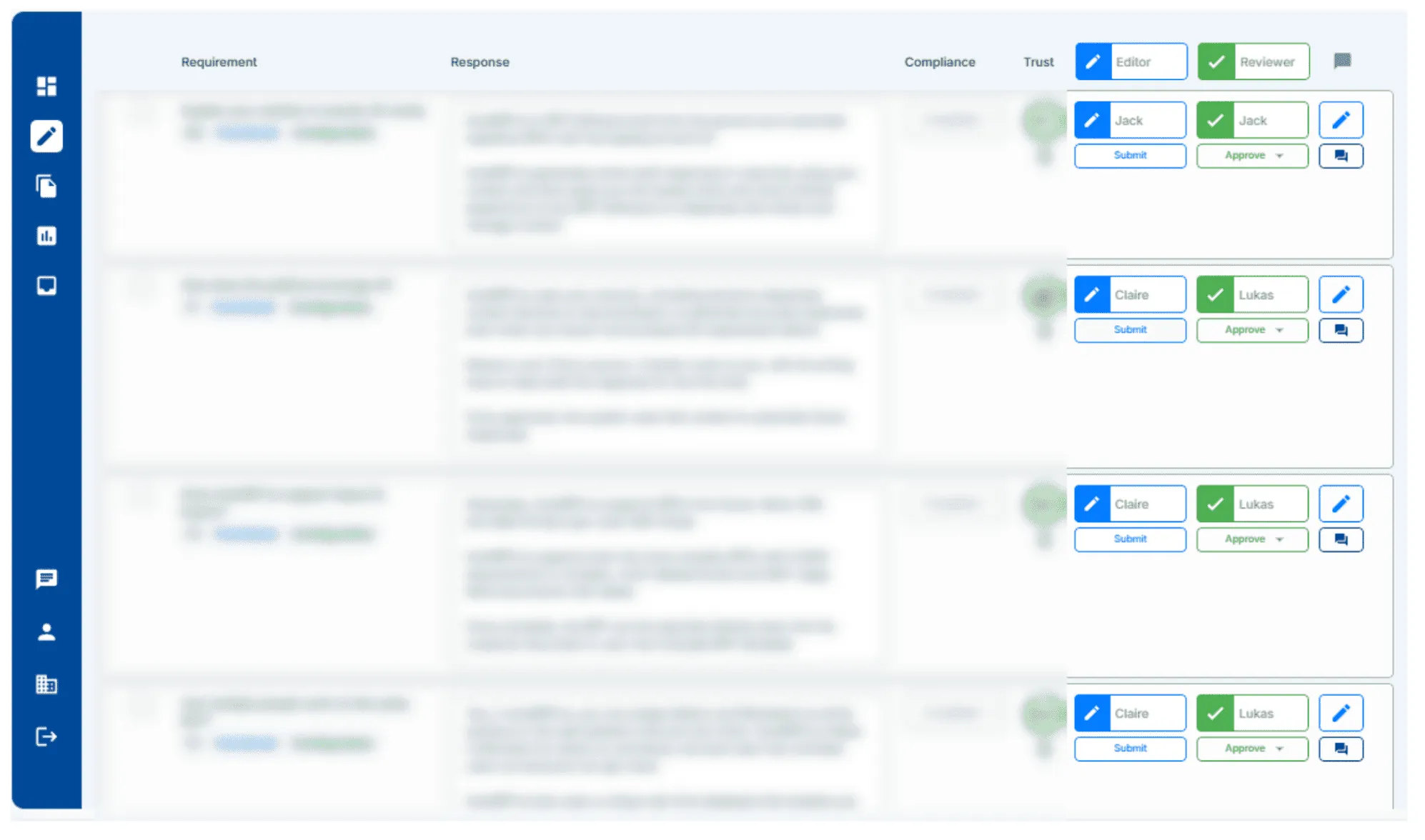
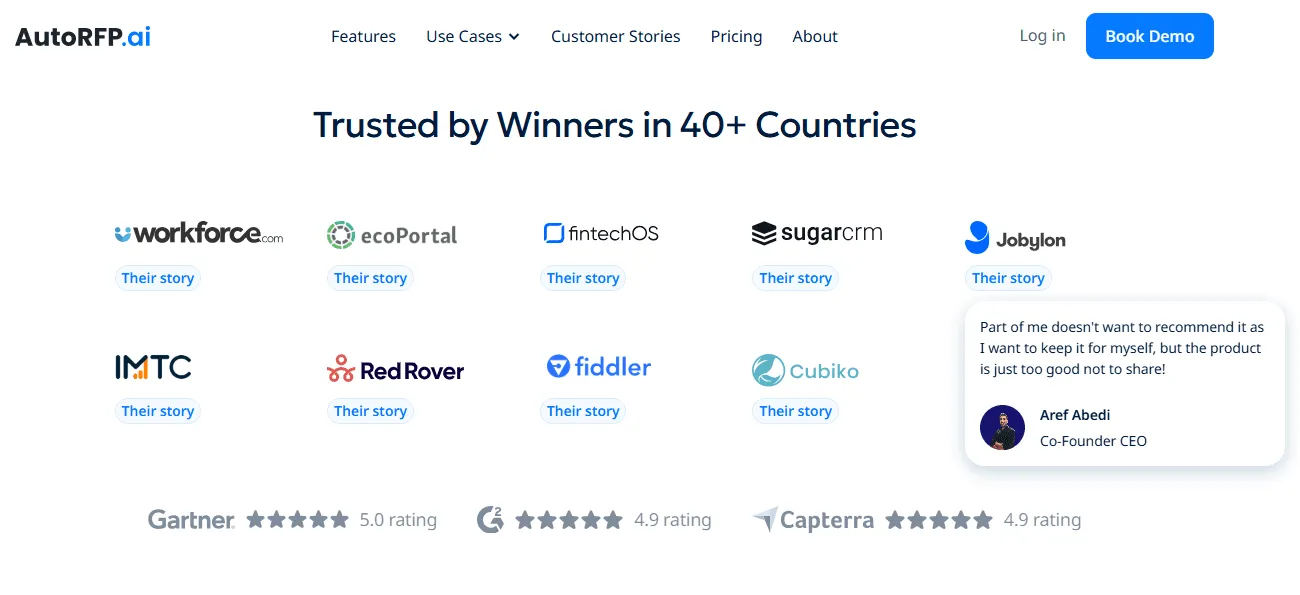
ecoPortal transformed their approach by implementing clear role assignments through AutoRFP.ai’s collaboration features.
“The joy that all of my team feel when they chuck in an RFP. This wasn’t the feeling in our previous RFP Software. Now, RFPs get mapped out and it just starts answering the questions straight away without any work.” – Jason McGeorge, Solutions Architect
Their team engagement jumped 30% because contributors finally had clarity on their responsibilities, turning frustration into productive momentum that helped them cut RFP draft time by 60%.
Step #4: Response Development and Content Creation
Good bid responses are so much more than just copying & pasting past responses. This is where knowing how to write a bid proposal makes all the difference, you need to address specific evaluation criteria, incorporate the prospect’s language, and demonstrate a genuine understanding of their unique challenges.
Instead of starting from a blank page, platforms like AutoRFP.ai generate first drafts in seconds by analyzing your content library, drawing from winning responses , and the unique context of each prospect. This means faster, more accurate responses without sacrificing quality.
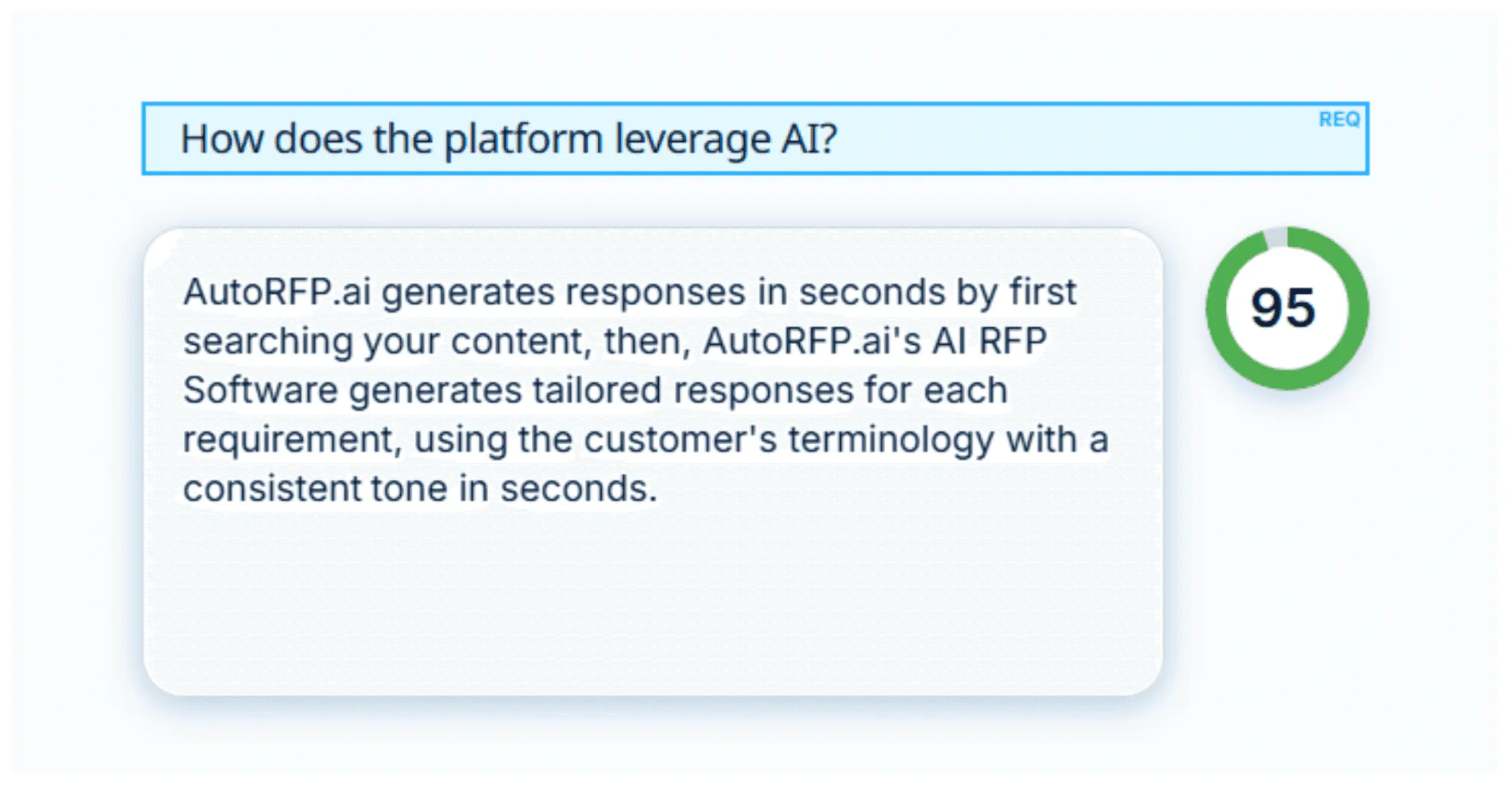
For example, thanks to AutoRFP.Ai - MedeAnalytics now completes over 75% of security questionnaires automatically, freeing experts to focus on strategy and personalization rather than retyping repetitive answers.
Side note: Win themes are the strategic messages that run through your entire RFP response, connecting your unique strengths to the prospect’s priorities. Every answer should reinforce at least one win theme. e.g faster implementation, superior security, or lower total cost of ownership. Repetition creates recognition.
Step #5: Compliance and Quality Review
Even brilliant responses can lose the bid, if they don’t follow instructions.
Your compliance check ensures you’ve addressed every mandatory requirement, followed formatting guidelines, included required attachments, and met page limits. Create a checklist that maps each requirement to your response location.
Compliance checkpoints should happen multiple times: after initial draft, mid-process, and before final submission. Some teams implement a Red Team Review where uninvolved colleagues evaluate the response as if they were the prospect.
Read through the RFP thoroughly, so you notice dealbreakers early before you invest significant time in your response. You might discover contract terms that conflict with your standard agreements, liability clauses your legal team can’t accept, or payment structures that don’t align with your business model.
In public procurement and government contracting, non-compliance often means automatic rejection regardless of your solution’s quality. Using a pre-submission checklist helps teams catch issues that compromise otherwise strong responses.
Step #6: Final Assembly and Submission
You’ve built the components, now you assemble the final package.
Export your responses into the required format, whether that’s Excel, Word, PDF, or direct entry into tender management platforms. Double-check file naming conventions, submission portal requirements, and deadline time zones. Late submissions are rejected in formal solicitation processes, even if you’re seconds late.
Step #7: Post-Bid Analysis and Continuous Improvement
The learning happens after you submit your bids.
Track outcomes: wins, losses and go/no-go decisions. For losses, request debriefs to understand why. Organizations that systematically capture and apply post-bid insights see up to 30% increase in revenue and 50% improvement in win rates.
AutoRFP.ai solves this by automatically incorporating approved responses into future bids without manual library updates.
This creates a virtuous cycle where each win makes the next response faster and better.
Roles and Responsibilities in Bid Management
Clear accountability prevents confusion when deadlines loom.
Bid Manager / Proposal Manager: Oversees the full response lifecycle, coordinates contributors, manages timelines, and ensures governance.
Bid Project Managers: Track milestones, resolve blockers, and keep progress visible.
Subject Matter Experts (SMEs): Provide technical input, validate details, and ensure feasibility.
Pricing / Estimating Team: Build accurate cost models, vendor quotes, and bid packages.
Compliance / Legal: Review terms, flag risks, and confirm regulatory compliance.
Executives / C-level: Guide strategy, approve key decisions, and sign off on commitments.
In smaller teams roles overlap but clear documentation ensures nothing slips through the cracks.
Benefits of Effective Bid Management
A structured bid management process boosts both team efficiency and revenue growth. Here’s how:
Dramatically Reduced Response Time
Teams using modern workflows report time savings per RFP as their tools and processes mature. For Fiddler, security questionnaires that once drained 30 collective hours and weekend effort now take just 3–4 hours with AutoRFP.ai.
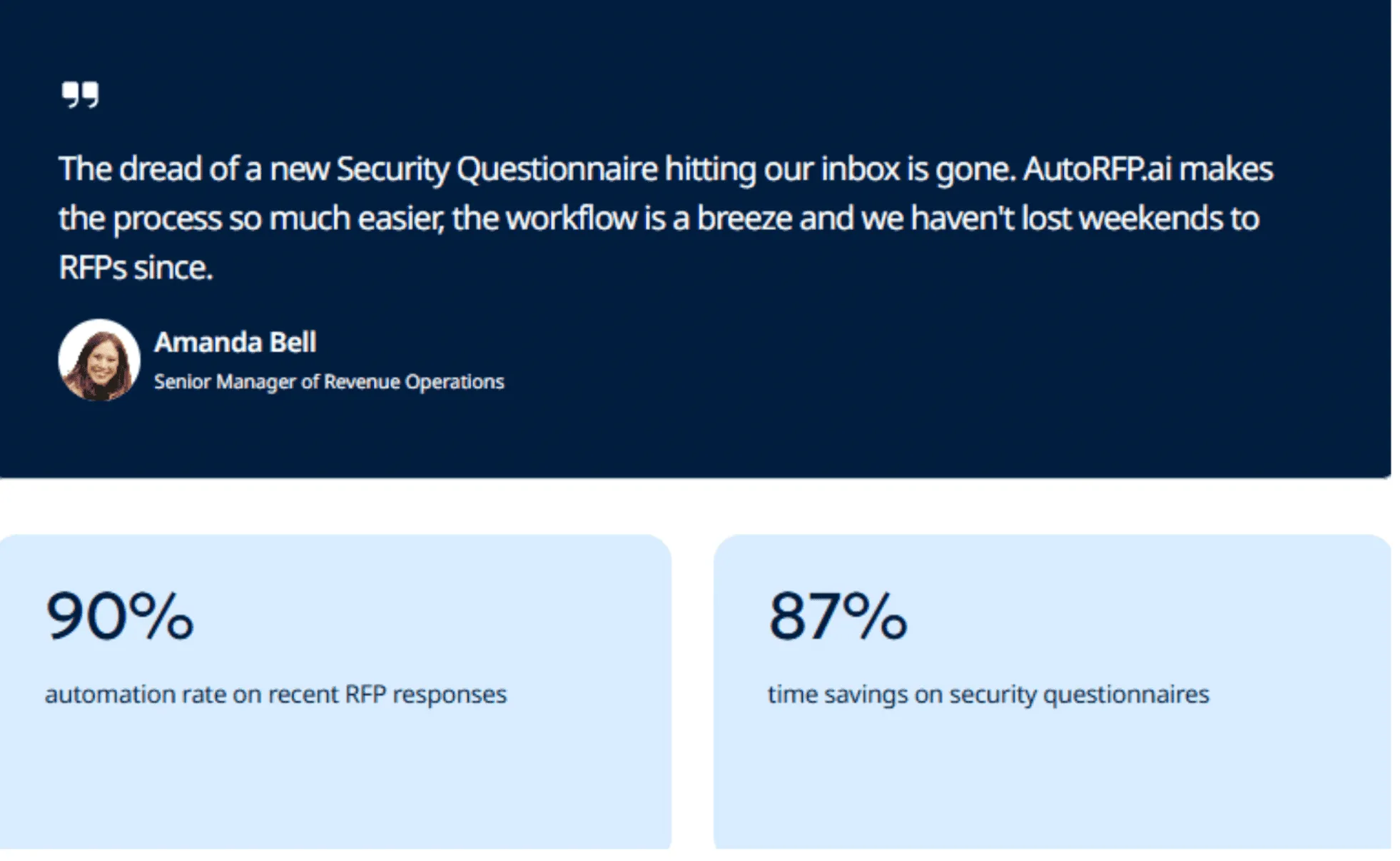
By replacing manual workflows with an AI-driven system, the team achieved 87% faster completion and reclaimed time for strategic priorities.
Enhanced Team Collaboration
Platforms that enable real-time collaboration where team members see updates instantly rather than emailing versions back and forth fix the issue of scattered information.
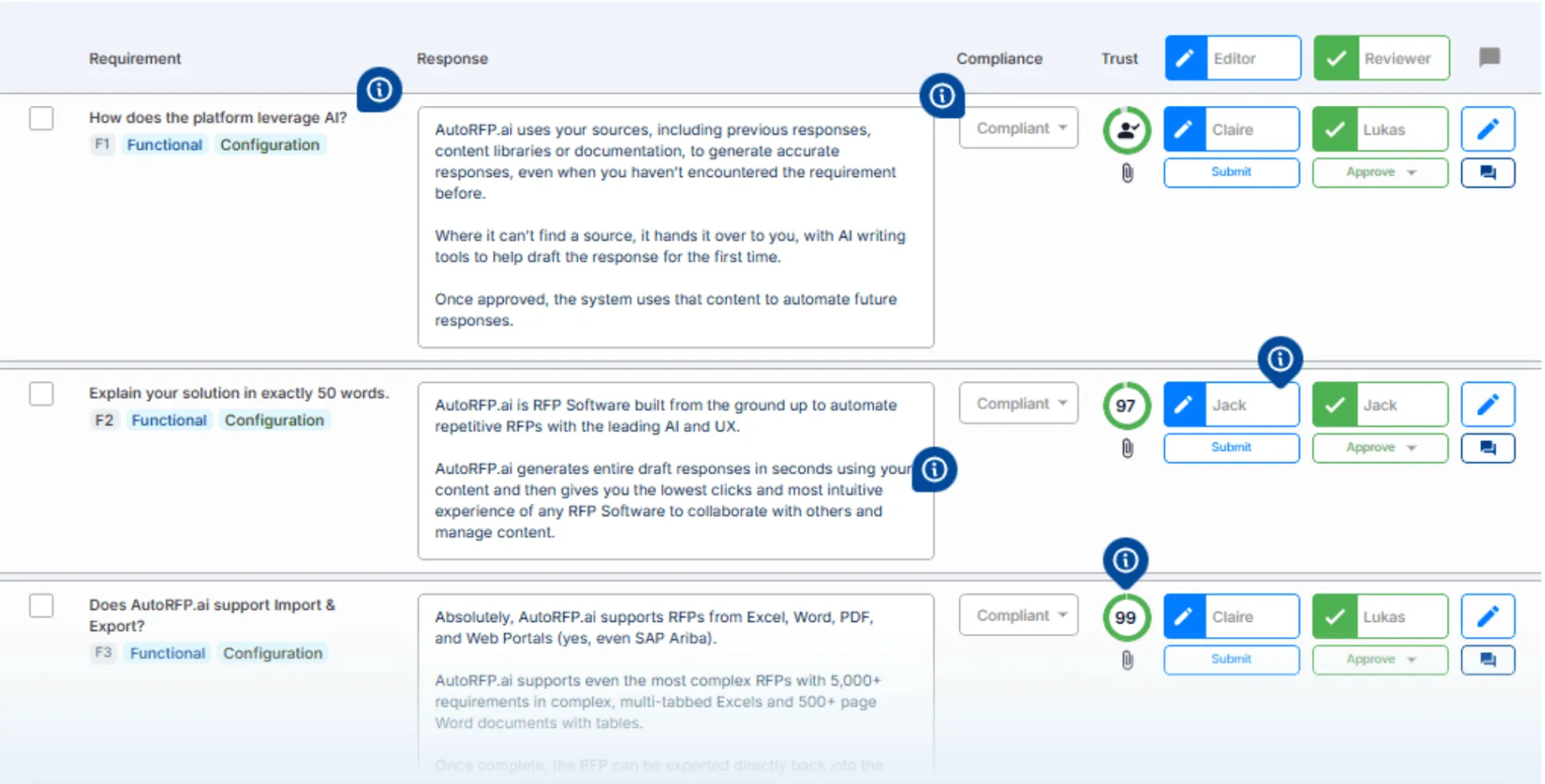
For instance, AutoRFP.ai’s collaboration features let you assign sections with minimal clicks while the platform tracks progress automatically.
Stronger Compliance and Quality
Building in systematic reviews, using proven templates, and applying consistent quality standards across all responses reduces the error rate that costs you winnable bids proposal. You’ll find free resources like our ChatGPT prompts for RFP quality helpful in enhancing response development.
Common Challenges in Bid Management
Even experienced teams get hit by these roadblocks that undermine their effectiveness:
Manual documentation overload: Copying content from past responses, reformatting for new templates, and updating outdated information consumes enormous time without adding strategic value
Tight deadlines with limited resources: You receive RFPs with two-week turnarounds while your team is already stretched thin, creating pressure that forces quality compromises
Inconsistent quality across responses: Different bid writers use different tones and include varying levels of detail, undermining your professional image
These challenges compound as organizations scale. What worked when you responded to five RFPs per quarter breaks down at twenty per quarter, so you need to implement systems that eliminate these friction points altogether.
For techniques that address these issues; standardizing tone, reusing approved content, and accelerating first drafts, see our guide to ai bid writing.
Important: The hidden cost of poor bid management is team burnout. Calculate not just the revenue impact of low win rates but the recruitment and training costs of constant turnover in your bid team.
Best Practices in Bid Management
Winning teams follow proven approaches that maximize efficiency while maintaining quality.
Start with Clear Bid/No-Bid Criteria
Every opportunity evaluation should use consistent criteria that remove emotion from the decision.
Document your framework: minimum contract value, strategic alignment, competitive position strength, resource availability, and relationship quality. Taking a “No-Bid” stance is as important as knowing when to pursue.
Build a Dynamic Content Repository
Stop managing static libraries that become outdated and unusable. With tools like AutoRFP.ai, you eliminate manual library maintenance entirely.
When you approve a response, it automatically becomes available for future bids. The AI learns your writing style and generates contextually appropriate responses, creating a cycle where better responses lead to more wins, which improve your content repository, allowing you to accelerate future responses.
Pro tip: Tag approved responses with metadata beyond just topic areas. Include details like industry vertical, deal size, compliance framework, and win/loss outcome. This context helps your RFP software surface the most relevant content for new opportunities and lets you analyze which messaging drives successful outcomes.
Automate Repetitive Tasks
71% of bid professionals say their role must evolve because AI now handles tasks that previously consumed most of their time.
To beat your competitors who are not using AI, leverage AI-driven bid management tools that take care of repetitive work: generating first drafts, formatting responses to match templates, and suggesting relevant past responses.
Curious how AI can transform your bid workflow? Check out the process with AutoRFP.ai.
How RFP Software Improves Bid Management Efficiency
Thankfully, modern RFP software addresses every friction point in the bid management process. Here’s how AutoRFP.ai specifically transforms your workflow:
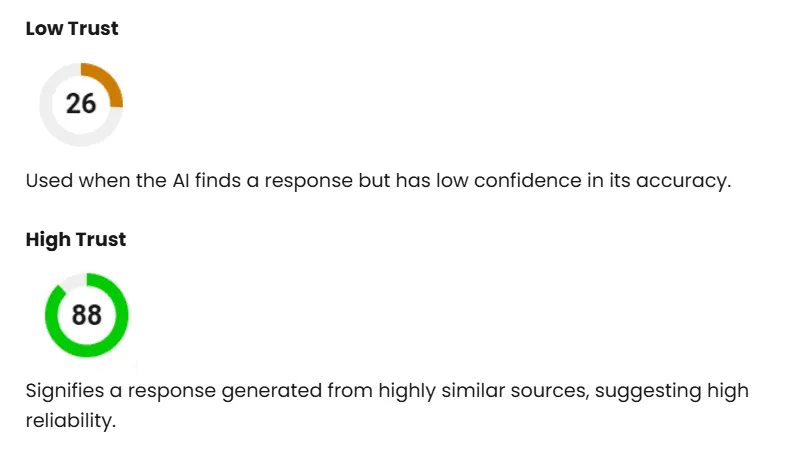
AI Response Engine with Trust Scoring: The platform pulls from your content library, past responses, and company documentation to generate accurate first drafts in seconds. The trust-based scoring system assesses how well each piece of content meets new requirements.
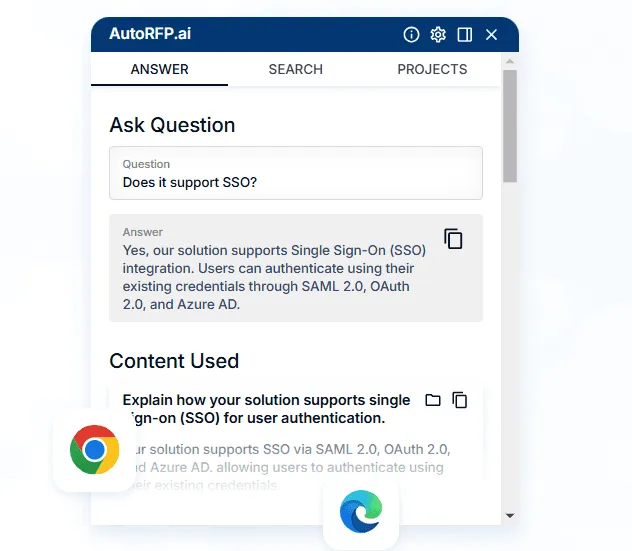
Universal Format Support: Import RFPs from Excel (even complex multi-tabbed spreadsheets), Word documents, PDFs, and web portals. The browser extension lets you respond directly in online portals, eliminating the copying and pasting between systems that creates errors.
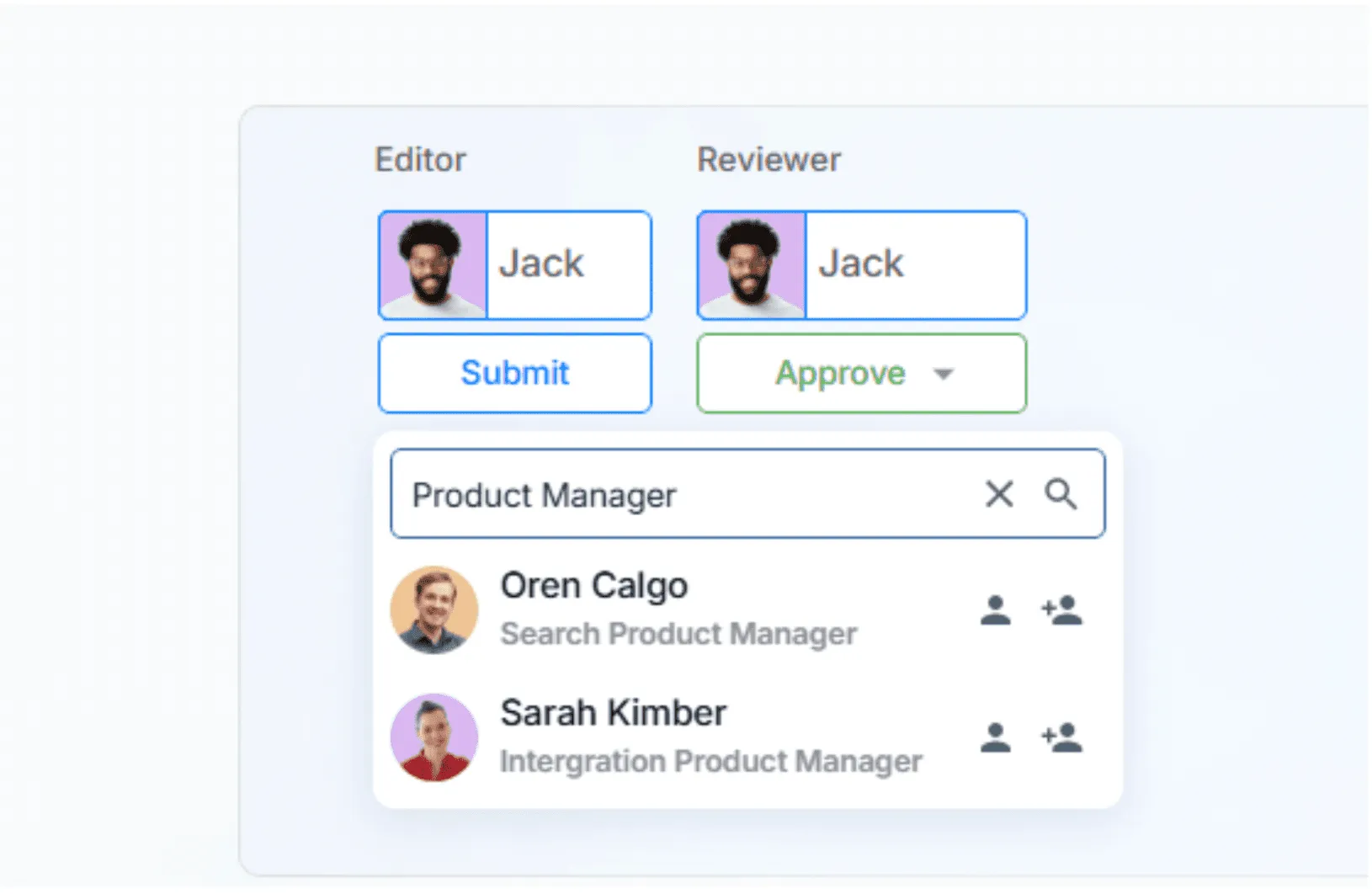
Real-Time Collaboration at Scale: Assign contributors with minimal clicks and watch updates happen instantly as your team works. All plans include unlimited users, so everyone from executives to subject matter experts can participate without worrying about seat costs.
Enterprise-Grade Security: AutoRFP.ai is ISO 27001 and SOC 2 certified with regional data centers in the EU, US, and Australia. Unlike some vendors, we never train AI models on your confidential information.
“AutoRFP.ai has taken us to the next level globally. We’re responding to double the RFPs with AI while having time to give better responses. It’s a competitive edge.” — Jake Phillpot, CEO, Workforce.com
Demo AutoRFP.ai to start reducing your response time by 60% while improving quality and win rates.
