
Step By Step RFP Response Process Guide To Win More in 2026
Discover the 7 critical steps to a winning RFP response process that can boost your win rates by up to 64%. This comprehensive guide reveals how top-performing teams are leveraging automation to respond to more RFPs while improving quality and reducing stress.

Tom Ritzker
Technical Account Manager, AutoRFP.ai··7 min read
For many teams, responding to an RFP feels intimidating long before the first draft is written.
If you’re new to the process, it can be hard to know what a winning RFP response looks like. And if you’ve been at it for a while but keep experiencing losses more than wins, the problem usually lies in the process behind how you respond.
In this article, I’ll walk you through the seven steps of a well-structured RFP response process, along with sharing strategies to follow and mistakes to avoid.
An Overview of RFP Response Processes

Video transcript
So you've just received an RFP. Maybe it's the first time you're doing it. Potentially you're an experienced bid manager, and you wanna understand what is the RFP management process, like process, challenges, and how do you win these highly competitive and challenging bids? In this video I'm gonna show you through the exact RFP management process, challenges, share with you some data in relation to winning bid teams and how they win these complex bids that can really elevate your business. Let's jump into it So why does RFP management matter? An RFP or request for proposal is when a large organization, let's say an enterprise with 10,000 staff, or federal government body wants to procure products or services. Where RFP management matters is we surveyed with between AutoRFP.ai and Stargazy over ninety-seven bid professionals in our twenty
twenty-six proposal win rate report. You can find the link below if you wanna have a look yourself of the proposal win rate report. In this report, we found that fifty-one percent of teams without content automation sit in the low win cohort. So in our RFP management video today, we're gonna go into content automation. We're gonna talk about how ninety-four percent of high win teams use joint collaboration with their subject matter experts, not having the subject matter expert drafting. And where this all matters is the median shortlist rate. So the rate of which your RFP makes it to the next stage and isn't disqualified is sixty-three percent for high win teams versus thirty-eight percent for low win teams. So the teams that have very strong RFP management processes and structure, not only are they winning more, but they're making it through the RFP process to the next step almost double or triple the rate of other teams with content automation, joint collaboration with SMEs, and a lot of other things.
So let's jump into it. But before that, I wanted to leave you with this quote: " Most teams lose RFPs because their system is perfectly designed to produce the results they currently achieve." That was in the Proposal Win Rate report from Christina, the founder of the Stargazy community, a bid manager community, and that really stuck with me, is that if you have a poor system for your RFP management and response, you are setting yourself up to fail, which is why RFP management and systems and processes matter a lot more than heroic efforts one-off bid that you spent, hours and hours fine-tuning. But actual process and repeatable ways to win will get you and your business more revenue than just the one-off effort of trying to win a random bid. And finally, sixty-five percent of the bid teams that win the most
use AI proposal tech, which is what Audirfp.ai is and where I'm from. So what is RFP management? RFP management is how you organize everything that happens between receiving an RFP and submitting your response. Think about it could be everything from when you first discover an RFP on a public tender notice board. Let's say it was for a public tender notice board. Receiving an RFP and submitting your response. It involves people, content, and process. So what is the RFP management process? It starts off with a kickoff meeting. When you see it or you receive that private or public RFP, think about who needs to be involved. Get executive stakeholders on board quickly, especially if it's a very highly competitive and commercial bid. What is the response strategy? How are we going to make our response best fit for the evaluation criteria to win the RFP? Draft and assign. Who is doing what section?
How are we going to complete those sections? And overall, what does a great first draft look like? That is where AI can help the most. Review and submit. Who gets final say on the pricing and commercial? Who gets final say on legal? Who gets final say privacy, security, and compliance measures? Make sure that's clear from the start, and be ready when you have your first draft and everything is ready to be reviewed, that it can be submit cleanly to the right people at the right time. Audit and analyze. Something we don't do often enough in bid management is think about how could we do better with this bid? What feedback can we do, and how can we improve for next time? Which leads into that next one, continuous improvement, and that is the difference between a one-off effort and a systematic approach to RFP management and bid response that will get you to win bid after bid versus just that random one bid that you were lucky to get. An effective kickoff meeting does not just rehash to everyone
exactly what the RFP is saying. It is about establishing clear deadlines, where we talked about who is going to submit each answer each section, who's gonna draft each section, who's going to review each section. That's where you wanna have all those people there to establish clear deadlines for each of those contributors. Then you should already have somewhat of an understanding here, but this is where you can kinda lean on the people in this meeting to develop win themes. A win theme is what is your clear competitive advantage or way that you are going to structure your response with persuasive writing, with clear customer stories, that will get you the win in this RFP. For instance it could be an enterprise that cares a lot about security and privacy, and it could be based in the EU, is looking for a vendor who meets certain requirements. And you could be the only vendor, and you may know that you're the only vendor who meets the high-level requirements in relation to security and privacy, and you believe that's a competitive advantage for your company and for this bid.
Overall make sure that you plan all your supporting documents, so everything that the final submission should include. And you can use like an RFP checklist. We've got a pre-submission checklist in the links below. But you can use a pre-submission checklist to make sure, again, all of that is taken care of when you go to submit. And then assign a single project owner who drives accountability. This would often be a bid manager or at least, or a project manager, someone who is keeping an eye on all the deadlines. Clarification questions is an often overlooked part of the RFP process that can really help you understand that buyer and should be used every time. What you don't wanna be doing is submitting a question for the sake of submitting a question. Don't ask something that is very clear in the RFP. That could reflect negatively. But do think of some useful questions, that you can submit back to the buyer that will, help understand their current solution better and what they're currently doing. Map requirements to identify capabilities.
You could look at, for instance, there could be Moscow ratings, there could be mandatory nice to have, must-have, and so on. But each of those requirements you can compare to, evaluation criteria, and you can look at where do you stack up. But every single one of those requirements, where do you stack up just at a first glance? Even better is that step is in your AI go, no go or your go, no-go process before you even start to bid on, start contributing resources. You've already seen if you're actually a good fit for this bid before jumping headfirst. Build a response plan with section owners, deadlines, and review cycles. We discussed that just before. And decide your competitive angle before writing a single word Now, drafting response and assigning owners.
So this is where we actually start to write. So each of the reviewers and writers they begin to work. Use real-time collaboration so multiple people can work simultaneously. You never wanna have a bid that only one person can access at a time. That's not very conducive to strong teamwork. Pull from your your content library for common questions instead of writing from scratch. So at the start of the video, I mentioned how a strong content library often underpins a winning bid team, and here is the time that you can use that. So if you have pre-filled answers or approved answers in regulatory environments that you can pull from readily to answer common requirements, then this is where you use that. Make sure, though, you're not just mindlessly copy and pasting. Make sure that where appropriate, you're weaving in that win theme throughout the RFP and bid response. AI tools, and this is where a company like and product like ours, AutoRFP.ai, really shines, is generating that first draft.
AutoRFP will demonstrate a first draft in a matter of seconds from a blank RFP document and it'll leverage your content library for that, really speeding up the RFP response time, increasing participation rate, and giving you more time to write even stronger and better responses. So it goes into kind of like an AI feedback loop to continuously improve your responses. That can be one part tooling, and tooling can be one part of your RFP management process and response process that can really underpin a winning strategy. Some larger bids and structured processing involve a different colored reviews, where it goes through multiple and sequential reviews of different sections for relevant people. One trap around reviewing is making sure that the value of the bid and that win theme isn't lost through people's opinion. If you have ten different people review a section, you're gonna have ten lots
of different feedback and potentially some of them are contradictory or some of them are the same. But you wanna make sure that, of course, you're applying feedback if they're experts in that space. But you as the editor or project owner of that section should ensure that the win theme and what makes that a winning bid isn't lost. That's the review trap And finally, just before you go to that final review, run your pre-submission checklist, spelling, grammar, compliance, consistency and so on. And again, in the description below, we've got our pre-submission checklist that you can download for free, and that can be part of your winning process. Finally, we've now submitted that RFP. So some kinda top-level metrics that you should track is your stages the bid goes through. How many do you not bid for because it wasn't a good fit? That's a good thing to measure. Make sure there's endless opportunities, but you wanna bid what actually makes sense. The ones that you bid for, what were the outcomes of those b-
The ones that you bid for, what are the outcomes for those bids? Was it won? Was it lost? Did you withdraw? Did you stop the bid because of resourcing issues and never submitted it? Next level, once you have that data in terms of the status of your bids , is what were the size of the bids and what was the cost of the bid? That's a really tricky thing to measure. There's some great resources out there around cost of bid, but effectively you wanna make sure that these bids are profitable. So if there's a ten percent chance on a ten million dollar bid, but it costs two hundred grand to bid, that's a really tough one to make. And then also make sure that, you wanna make sure, in a good system or a good AI RFP software like AutoRFP or other software out there in the RFP software market, should automatically be using your responses that you're working on and add them into your library and intelligently store that and categorize that content so it can be used for next time. That's where it's really important to consistently write better and
better, and your content library kind of builds over time, and your systems are set up to produce better results as your company gets, makes bid management and RFP response and the management, RFP management process a competitive advantage of the company And finally, continuous improvement. So it's really not out there to ask for feedback, whether that's a private enterprise bid or if it's government bid. Often this may even be posted publicly. But you wanna make sure you get feedback on the bid, and not just on the bids that you win, but the bids that you lose are sometimes more important. You may unearth that you shouldn't have bid on that in the first place, that it wasn't a good fit from the start. You may realize a flaw in your RFP management process and where something needs to be sharpened up for next time. And continuous improvement in your RFP management process implementing that will just kinda make it better and better every time, and that's what really helps companies go from winning the occasional RFP worth a million dollars
to consistently winning million-dollar RFPs and substantially growing the business's footprint in the enterprise so what are some of the common RFP management challenges? Outdated systems and bottlenecks. Thinking about that process is where is the most amount of friction? That could be following up people to review. So you're always having to message them and be like, "Hey, can you review a section? This was due yesterday." It could be that your content lives in ten different systems. You can never find the right answer. It could be technical docs. It could be SharePoint. It could be Google Drive or whatever. And then and then content library paralysis. So if forty percent of saved references may reference outdated information, no one has the full data to update them. Now, here's some best practices to help you win RFPs consistently and land those million-dollar contracts. Automate the repetitive work. AI has come so far and can help out in particular places of the RFP management process.
Whether it be automating the repetitive work of a first draft and finding the relevant information out of your content library, AI is incredibly strong in that. AutoRFP.ai customers consistently get eighty percent plus AI first draft rate off their existing content, and you wanna make sure that standardized templates. Centralize everything, so it's easy to find the right and source the right information. Cross-functional collaboration, multiple people can edit at once. Reviewers it's easy for someone to review. It's an easy-to-use system. You don't want some clunky software that they have to log in, and an SME can never use it, and therefore, they hate having to help you on an RFP. And track performance metrics automatically. Every time you are moving through your CRM or your relevant software, these opportunities that the bid software is also updating, or at least your bid process data is there. Automating routing questions to the right SMEs, so you don't have to think about who should this go to. Real-time progress tracking so nothing falls through the cracks, and automatic importing of different documents to get a really high level of AI first
draft, and trust scores telling you which answers need human review. So the AI is doing a lot of heavy lifting. That's kinda what AI RFP management looks like is the AI is taking care of that manual work, and the human is coming in to ensure that the win themes are strong, that the pricing is competitive, and that evaluation criteria are met, and they're going to win that bid. All right. What I wanted to leave you with today was a live demo of just the project management capabilities with an AutoRFP.ai and how that can help your RFP management process. So looking in here, we have an RFP project. You can see here that already forty-five of my responses have been submitted and reviewed, nine have been, nine have been submitted but not reviewed, and there's still fourteen left drafted. So I can quickly click into my Drafted, see what ones are left left need to be edited, and then I can look after those as needed. So I can click into my fourteen draft and see, okay, we're still waiting for someone here to to submit those, and I can go in, submit, and make changes. So it's a very easy kinda multiplayer capability, seeing where everything's at.
Can go to my Project Overview and see that the project is due in five days. This is everyone who worked on that project, when it's due. My first draft was highly AI automated, ninety-seven point one percent draft. And overall we have sixty-two percent exceed compliance, thirty-five percent fully compliant, and I can quickly see what response is partially compliant and understand why that's partially compliant and kinda review that. By just having one look and a couple of clicks, I can see, against the evaluation criteria, what responses need to be improved or where we're potentially weak on this competitive bid before having to really do a lot of work. I can see project attachments and everything else going into this bid. And so that's what a project overview dashboard for a competitive bid looks like. If you wanted to have a look at AutoRFP and give it a try, you can go to our website autorfp.ai. Here, you can have a look and learn more about our product and everything else that kind of goes into it and what kind of automation rates our customers are achieving with autorfp.ai. And you can also book a demo to spend time with our team, and in this demo, they'll
provide a really guided walkthrough of the platform, help understand your business, and see really if it's a good fit or not. Thanks. I'm Rob from autorfp.ai. Hopefully, that was helpful in relation to your RFP management process. See ya.
The RFP response process is a structured workflow companies follow to evaluate an opportunity, create a tailored response, and deliver it in line with a prospect’s request for proposal, but it really starts once your team understands how to find RFPs that match your ideal customer profile.
Unlike ad-hoc responses that may be a hit or a miss, a refined RFP process sets clear steps, quality standards, and team responsibilities to ensure companies like you maximize win rates.
This process usually starts with analyzing a proposal for strategic fit, organizing the right Subject Matter Experts (SME) to contribute to the response, and detailing a workable plan to follow. From there, teams write detailed responses to RFP requirements, get it reviewed by upper management, and submit it to the prospect on time.
Benefits of a Well-Structured RFP Response Process
A well-thought-out RFP response process does more than simplify response creation, it strengthens your chances of winning bids.
Compared with teams relying on ad-hoc processes, those following a structured workflow respond faster, collaborate more effectively, maintain higher quality, and consistently outperform their competitors.
Greater Time and Cost Efficiencies
A standardized process with reusable content libraries greatly reduces response time.
Rather than recreating answers for every proposal from scratch, teams build on pre-approved responses and focus on customizing them to meet the prospect’s requirements.
This efficiency means teams can pursue more opportunities without increasing headcount or overloading the team.
Stronger Team Collaboration
A well-structured RFP process clearly defines roles, responsibilities, and timelines, so everyone knows what’s expected from them and when. This reduces confusion, prevents duplicated work, and ensures SMEs are only involved when needed.
Teams with robust processes often use RFP response automation tools that include native collaboration features. This keeps communication centralized and ensures important updates aren’t lost in Slack threads.
Greater Consistency in Responses
Standardized templates, pre-approved answers, and quality controls ensure every proposal response sent is consistent, accurate, and aligned with your unique selling propositions.
This not only increases the chances of winning RFPs, but it reinforces your brand positioning and strengthens your reputation in the industry.
Better Strategic Decision-Making
One step of a structured RFP process is analyzing which types of RFPs you win, where you lose, where are the friction points, etc. These insights allow teams to refine their qualification criteria, strengthen their content library, and allocate resources more effectively.
Hence, more data-driven decision making in the future.
Higher Win Rates
Quick turnaround times, smooth team collaboration, and consistent responses all contribute to a higher RFP win rate. Compared to ad-hoc submissions, a structured RFP process sets you up for success from the first step as you only focus on winnable opportunities and have a robust system in place to support you.
7 Essential Steps for a Successful RFP Response Process
This step-by-step process of responding to RFPs ensures your responses are accurate and positioned to win. While the exact steps may vary by team size or industry, it generally boils down to the steps outlined below.
Step 1: Initial RFP Assessment and Qualification
Every minute spent on an RFP you shouldn’t pursue is time stolen from opportunities you could win.
Start with a strategic qualification process:
Assess alignment with your company’s capabilities and strategic goals
Evaluate your relationship with the prospect (cold vs. existing client)
Calculate the potential ROI versus effort required
Determine competitive positioning and your realistic chances of winning
Review timeline requirements against your current workload
Implement a formal go/no-go decision framework. Teams using structured qualification processes report 80% adherence to their qualification criteria, compared to just 45% for teams without formal processes.
Pro Tip: The go/no-go evaluation isn’t as complex as it may seem. Use our free AI go/no-go prompt for RFP tender management that can be inputted to any LLM. Download the template here →
Step 2: Assembling Your Response Team
The average RFP requires input from 28 people across your organization. Without clear roles and coordination, chaos ensues.
For each RFP response, designate:
RFP Response Manager - Oversees the entire process and timeline
Subject Matter Experts (SMEs) - Provide specialized content for technical questions
Sales Representatives - Offer customer insights and competitive positioning
Legal/Compliance - Review and verify all compliance-related statements
Executive Sponsors - Provide high-level approvals and strategic direction, and typically join the finalist RFP presentation to reinforce commitment, partnership, and accountability.
Create a responsibility matrix that clearly defines who handles what sections and when their input is due. This simple step can reduce internal confusion by 56%.
Step 3: Analyzing Requirements and Planning Your Approach
Don’t just react to RFP questions. Plan your attack.
Conduct a thorough RFP analysis of the document to:
Identify and prioritize key requirements
Map questions to your strongest capabilities
Flag potential red flags or areas of weakness
Recognize opportunities to differentiate your solution
Build a comprehensive response strategy
Create a compliance matrix to track every requirement and ensure nothing falls through the cracks, and mirror those sections inside an RFP template example, so the team writes to the evaluation rubric, not around it. This simple tool can improve response completeness by 42%.
Step 4: Content Development and Response Creation
This is where deals are won or lost. Your content must be compelling, accurate, and tailored to the prospect’s needs.
For effective response development:
Leverage past successful responses as starting points
Customize all content to address the specific RFP requirements
Incorporate customer success stories and relevant proof points
Use clear, concise language with visual aids where appropriate
Focus on business value, not just technical specifications
Organizations using automated RFP response solutions report writing their responses 53% faster than those using manual methods.
Step 5: Internal Review and Quality Control
Nothing kills credibility faster than inconsistencies or errors.
Implement a structured review process that includes:
Technical accuracy review by subject matter experts
Strategic review to ensure alignment with win strategy
Competitive review to strengthen differentiation
Compliance check against all RFP requirements
Final quality control for formatting, grammar, and overall presentation
Companies that implement formal review processes report 77% higher satisfaction with their response quality compared to those with ad-hoc reviews.
Step 6: Final Submission and Follow-up
The submission itself needs to be flawless.
Before hitting send:
Verify all required documents are included and properly formatted
Confirm adherence to submission guidelines (format, delivery method)
Prepare a compelling RFP cover letter that summarizes key value propositions
Schedule any necessary follow-up activities
And after submission:
Send a professional confirmation email to the prospect
Document lessons learned while the process is fresh
Follow up appropriately based on the prospect’s procurement process
Step 7: Post-Submission Analysis
The most overlooked step is often the most valuable.
After each RFP submission:
Document what went well and what could be improved
Update your RFP content library with new responses
Analyze team performance and process efficiency
Track the outcome (win/loss) and gather feedback when possible
Organizations that conduct post-mortem analyses on their RFP responses see a 32% improvement in win rates within six months.
How to Improve and Streamline the RFP Response Process
Along with following the above step-by-step process, these RFP response strategies will help you gain a competitive edge and improve win rates.
For revenue teams, integrating RFP response workflows with broader RevOps tools ensures better alignment between sales, marketing, and operations while maintaining consistent data and performance insights across the entire revenue cycle.
Implement an RFP Automation Software
The backbone of an optimized response process is a robust RFP management software. My recommendation is AutoRFP.ai that has been built with AI at the core to give companies efficiencies that compound over time.
Here’s how AutoRFP.ai can help streamline your RFP process flow:
- Generate accurate first drafts to RFP requirements that don’t require edits
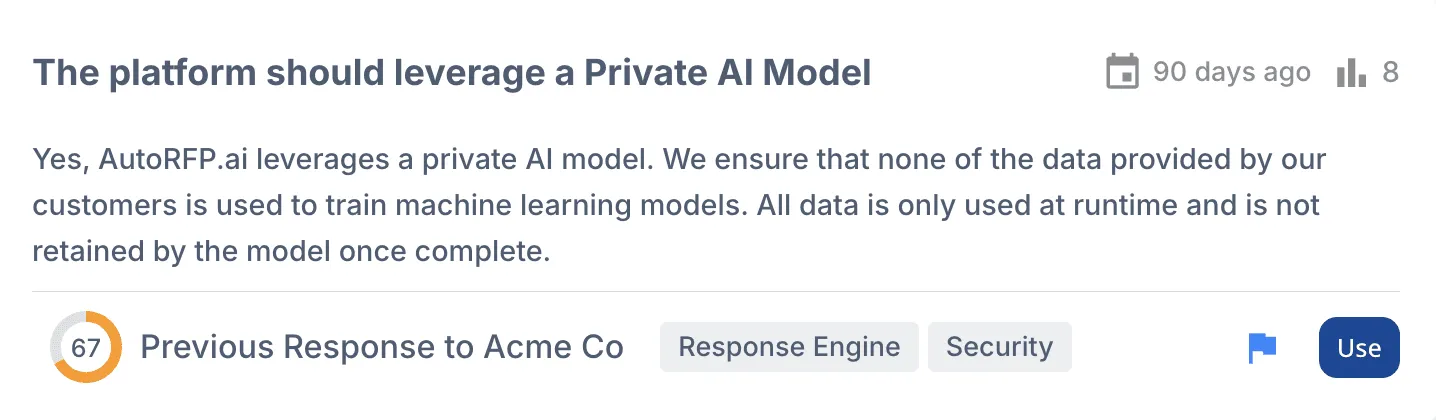
Update the content library automatically as you write responses to RFPs
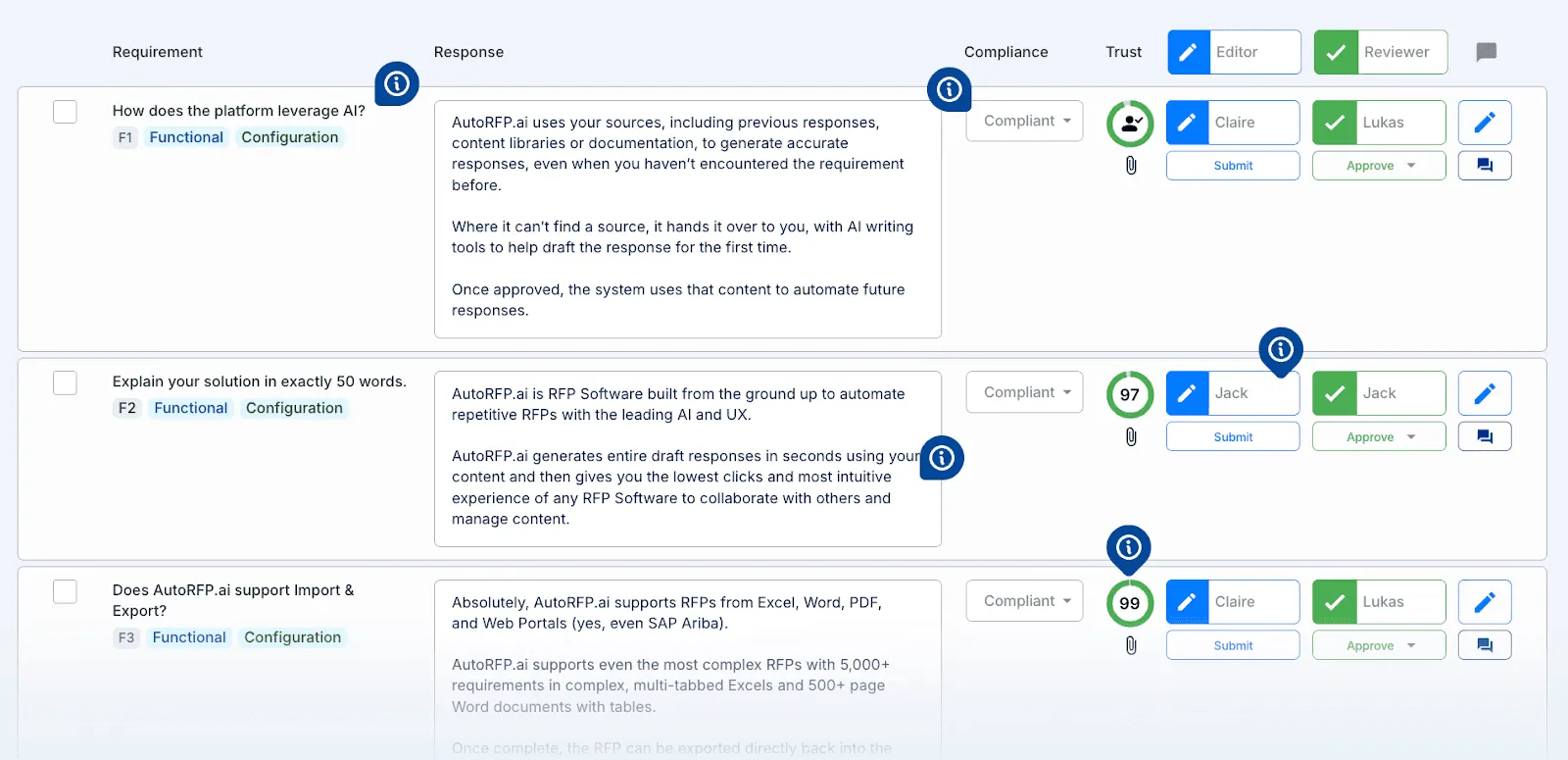
Collaborate with team members inside the app by assigning reviewers and editors
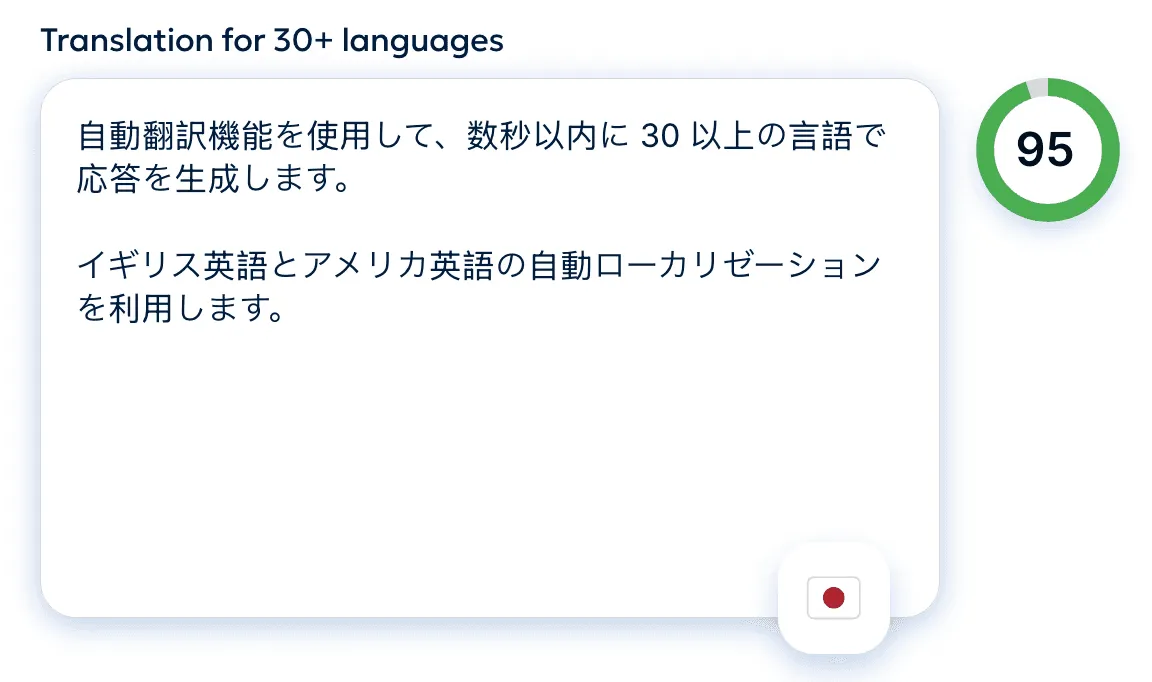
Respond to RFPs in 30+ languages
Export and import RFPs easily in Word, PDF, and Excel formats
For a detailed review of AutoRFP.ai, check out the video below:

Video transcript
Transcript is auto-generated and may contain minor errors.
Have you ever wanted to know how AI can answer RFPs? That's what I'm going to show you today using the power of AutoRFP.AI and how you can use AI to automate up to 80% of your RFPs. My name is Rob from AutoRFP.AI. Let's jump into it. AutoRFP.AI, we're a software product leveraging the latest models from OpenAI, Anthropic, and Google to automate our customers, whether that's technology companies, finance companies, healthcare businesses in 44 plus countries across the globe automating their RFPs. But, our goal is not just to automate, but to help them win. So, let's look at the RFP response market in 2025. We have our legacy RFP software players.
That's your Responsive.AIs, your Loopios, Qvidians, have been around for, you know, 10 plus years and really brought software to the RFP process in managing your subject matter experts and team members, project management, in having a question and answer bank, and using keyword search to automatically copy and paste answers from your content. Then, you have a lot of really new Silicon Valley based AI RFP software. It seems like every week there's a new AI RFP software. Probably no surprise to you watching this video. AI is a great use case for RFPs. There's a lot of new startups in the space. AutoRFP, we're actually in a nice position having launched 3 years ago before chat GPT released and building
our product since then with hundreds of customers all across the globe from Fortune 500 companies to Silicon Valley tech unicorns using our software every day to automate the mundane. That is what an RFP is, isn't it? It's a bit mundane. What kind of challenges do businesses and team members have when they search for an RFP software? You might be spending like Amanda here, who is one of our customers before she picked up Order RFP, spending a lot of time just answering RFPs. That raw horsepower needed to complete thousands of questions across these large documents, whether it's Word documents, PDFs, Excel spreadsheets, supplier portals like SAP Ariba. Amanda, actually their COO at that company, would spend an entire weekend
just answering an RFP. We've all been there. I have as well. Or you might be like one of our customers, Jason, before he picked up Order RFP, using a lot of time to maintain his legacy RFP software. He had this big content library of questions and answers and constantly was having to spend time just maintaining that, where he was now spending more time stuck in content nightmare land than actually answering RFPs. It was really challenging. Or you might be like one of our customers, Katie, before she picked up Order RFP, was spending a lot of time just trying to version control, wrangle subject matter experts to answer questions, and just the speed of collaboration and project management deadlines was really tough.
So, what AI workflow then automates this entire RFP process? First, people would upload their requirements, those RFP tender documents that you receive from your prospects in any format they come, whether that's PDF, Word, Excel, zip file. Upload all that relevant information into the system, and then it'll begin answering with AI those different responses in 40 plus different languages, whether you receive an RFP in German but write answers in English and have it translate back. It uses your data lake of content and AI to find the relevant information to then automate an RFP response to every single requirement and every single question. Then, once that's done, you have that
highly automated AI first draft, you get your team in there, project manage deadlines, ensure that there's proper oversight on responses from legal, security, pricing, commercials, whoever it is, they're engaging in the product and using it to collaborate and get that winning RFP response. You don't want to just automate, you want to win. And that's where Auto RFP really shines, because as you're writing those winning responses, it just gets better and better over time, constantly learning from your work. Awesome. Let's jump into the product. This is AutoRFP.ai. You can see I have all my different projects. I'm going to create a project. And here is my blank RFP documents. I've got a zip folder that contains three different documents in here. Really interesting what's happening right now is we're using Gemini Flash
2.5 to automatically answer any questions in relation to that document. So for instance, I want to know if data needs to be stored in specific geography and provided my answer there. So it's doing an AI go no go analysis. Then here we have our document. It's got multiple tabs in Excel spreadsheet. Automatically the AI has scanned the entire document and picked up every functional and non-functional requirement, everything that's relevant for my cover letter that I'm going to produce in my PDF. And then this appendix B has some information as well. Then we have our data lake of content in AutoRFP.ai. That might be your web pages, your integrations, 15 plus integrations that AutoRFP can pull in and sync automatically. And the AI is going to use specialized re-ranker models to then ensure that there's the
most relevant answer for that specific question. It's much better than just creating something in ChatGPT. I'm not going to do a translation today, but here I would translate if needed and I create my project. This is where we see the magic really happen. So we have our data lake of information, which is all our content from our business, the context, past RFP responses, and then we have the AI sourcing the relevant information, then the AI from that information drafts relevant answers, and we have multiple LLMs that then ensure that answer is the best it can be for that response in the entire context of our business and the entire context of the RFP. You can see that it's quickly answering those different RFPs. We can jump to different sections and see cool, RFP workflow, it's answered. Oh, there's a
few questions there that have a lower trust score. Let's jump into to understand why. So, that content there is relevant to the search query, but it's 7 months old. I want to make sure that a person reviews and actually submits a new answer for that. So, everything in my RFP workflow, I'm going to then assign George to be the editor for that response. George will be at receive a notification in Slack, in Microsoft Teams, or via email. George will be able to jump in, answer those, and then submit them for my review. So, that's how I collaborate seamlessly across OrderRFP.ai. Then, across my trust scores, I want to look down and find those that are still generating and any that are at lower trust scores, and again, further answer those questions and assign to different team members as relevant. We've got our drop-downs that are in the RFP were automatically assigned by the AI depending on the answer. Our
responses automatically generate and bring across tables, so I have my service level agreement, my SLA here, answered in a table and generated into the response. Images that you might have in your RFP response will also come through automatically with your content with the AI generating as well. I want to jump over to my project overview. I understand when this project is due, what the AI draft rate was, what my compliance levels are, who is involved in this RFP process, how many do they have to review, do I need to send any reminders? If I want to add any attachments to include in my submission. So, I'm going to uh include my ROI report, my integrating with Notion doc, and all the different information that I want to include in that submission, I can do so. Then I have my AI assistant. So, in
answering these responses, I can prompt and write custom prompts to improve that response. I can use my quick writing actions to fix up any spelling or grammar, check for inconsistencies, and so on. I can find and search with my AI semantic search to find any relevant content and use those answers as well. Then I can improve that response. Then in my comments, I can discuss with my team. Please review this specific part. So, then I can comment and collaborate with my team. Once I have my edited response from the AI, I can accept and see where those revisions are, and quickly accept that new response. I have a full audit trail of any AI actions as well as people actions over my responses. I can restore to previous versions. So, you never have a collaboration and versioning issue.
Everyone, multiple people at once, are working in OrderRFP. And then what I think's one of the coolest things is the AI assistant. With the relevant content and context, I can just chat to the AI regarding my business, regarding this RFP, regarding these requirements, and it can provide answers to help me improve my responses as I work through the RFP. Next, I'm going to approve all my responses because this one is ready to submit. So, now all I have to do is export that RFP. Now, all I have to do is export that RFP. So, I click export all and the power of AutoRFP and the AI involved here, I'm not fiddling around with those original source documents, inserting or copy and pasting answers. Instead, it is
automatically populating those answers in there. We've downloaded our files in those original format with AI having answered and automated our RFP process. I'm going to jump into We have two things here. We've got our customer files, which are the original documents that required answers, and we can jump in here and see all those answers and where they've gone. So, across my multiple tabs, we have all of my responses and the drop-down that's come through for every one of those responses with me not having to do a single thing, and then I'm ready to submit that Excel spreadsheet with those requirements. I've got my docx as well with the relevant information filled out, and one of the coolest thing is I have my cover letter or my proposal that I can include in that pro- process, and this includes all
relevant information and additional information on my RFP response. So, my export template that I created in Word doc and uploaded to AutoRFP as a template, the AI has then automatically generated answers and responses for my executive summary, for my transmittal letter, and for everything that I want to upload additionally, whether it's a solution overview, whether it's more information about our AI security and privacy, and all that information has come through, and the AI has filled this out. For instance, there's my SLA table that we saw the AI generate earlier, and it's filled that information out ready for me to then submit and add, includes any images like reviews across Gartner, and all that information has come through ready to export to the customer. And that's the end-to-end workflow of
AutoRFP.ai, from uploading my blank RFP, leveraging my data lake of organizational context and past RFP answers, for the AI then to automatically generate and respond to and automate the RFP process, to collaborating with team members across the entire RFP process, and then exporting to the original customer format and submitting my RFP. There's one really important thing I want to make sure to convey when you're thinking about AI and RFP software. And that is what might be the boring, but incredibly important security, privacy, and transparency. At AutoRFP.ai, we pride ourselves on getting security, privacy, and transparency right from day one.
Our customers, as I mentioned, in over 44 plus countries, hundreds of businesses from Fortune 500 to Silicon Valley unicorns using AutoRFP daily, have global hosting options across the US, across Europe in Germany, and in Australia for APAC. Everywhere we have global offices, an office in Vancouver, in Stockholm in Sweden, in Brisbane, Australia, providing 24 six support across the globe. There is zero training, and I want to make sure this is absolutely clear, zero training on customer data for models. We are not sending any customer data back to the OpenAIs, the Anthropic's, or the Google's of the world. Your data, customer data, is your data. The outputs that the AI generates is clearly stated
in our service agreement that those are your outputs. You control this data. It's not AutoRFP. We're not secretly building some sort of AI model ourselves for based off customer data. We're not secretly trying to hurt our customers in the long term. We build for our customers. AutoRFP is a bootstrap company, profitable, growing 15% month-on-month, headcount doubling every six months across the demand we have for our solution, and we build it for you, for our for our customers. We don't build it for venture capital to one day uh try to sell the company. We don't build it for private equity that are trying to lay off and you know, squeeze every penny from the business. We do it for our customers. That's why we built. And you can find out all that
information in our trust center and our legal center as well. If you're interested in jumping on long and learning more about AutoRFP.ai, head over to our website. We've got a lot of information there about the business, uh the product, about our pricing as well. Uh you've got our annual plans across scale, accelerate, and enterprise. We have customers with as little as 24 projects a year, so 24 RFPs a year, to as much as over 1,000 RFPs done every year. The scale uh all the way in between. You can book a demo and spend time with our team, and they can provide a much more uh You can spend time with our team, and they can provide You can spend with time with our team, and they can provide a much more detailed breakdown and a customized demo for you and your business about AutoRFP. So, head over to AutoRFP.ai today and learn more about it. Thanks. See you.
So, head over to AutoRFP today. That I'm Rob from AutoRFP.ai, and we just covered off AI and how to automate your RFP process with AutoRFP.ai.
Build and Maintain a Centralized Content Library
Create a searchable library of pre-approved responses, case studies, product descriptions, and compliance documents that proposal teams can quickly access and use without having to wait for SMEs to respond.
Creating a content library is the easier job when compared to updating and maintaining it. An outdated library will just dilute your chances of winning and hurt your brand reputation.
Check out the table below to know which information to update, when it should be done, and who should do it.
| Content Type | Update Frequency | Primary Owner |
|---|---|---|
| Product descriptions | Quarterly | Product marketing |
| Case studies | As published | Product marketing |
| Compliance certification | Annually or as changed | Compliance |
| Company background | Annually | Marketing |
| Technical specifications | With each release | Engineering |
Standardize Templates Based on Industries and Scenarios
Build templates for government, enterprise, compliance-focused, and other recurring RFP types your team handles to simplify and speed up responses. A solid RFP toolkit can give you a head start with cover letters, executive summaries, and Q&A formats already structured for reuse.
Each template should include pre-populated sections for industry-specific compliance requirements, relevant case studies, and technical specifications that those prospects would be interested in.
This standardization reduces response time compared with generic templates that require extensive manual updates.
Conduct Regular Win-Loss Analysis
This strategy should not be treated as a mere formality. Schedule quarterly reviews of your RFP outcomes to identify patterns in wins and losses. Analyze if the qualification criteria best predicts success or not, which templates have the highest wins, and where your process breaks down or faces friction.
Use these insights to improve on the RFP process continuously. Teams that do this on the regular see great improvements in both team efficiency and win rates over time.
Invest in Team Training and Development
Your RFP process is only as effective as the people executing it. Provide regular training on RFP best practices, persuasive writing, competitive positioning, and your company’s tools and workflows. Cross-train team members so they can support each other during peak proposal seasons.
Well-trained teams produce higher-quality responses faster, without getting stressed out.
Examples of a Well Optimized RFP Response Workflow
The below examples from real-life companies highlight the tangible benefits of combining a structured process with a modern automation tool.
Red Rover
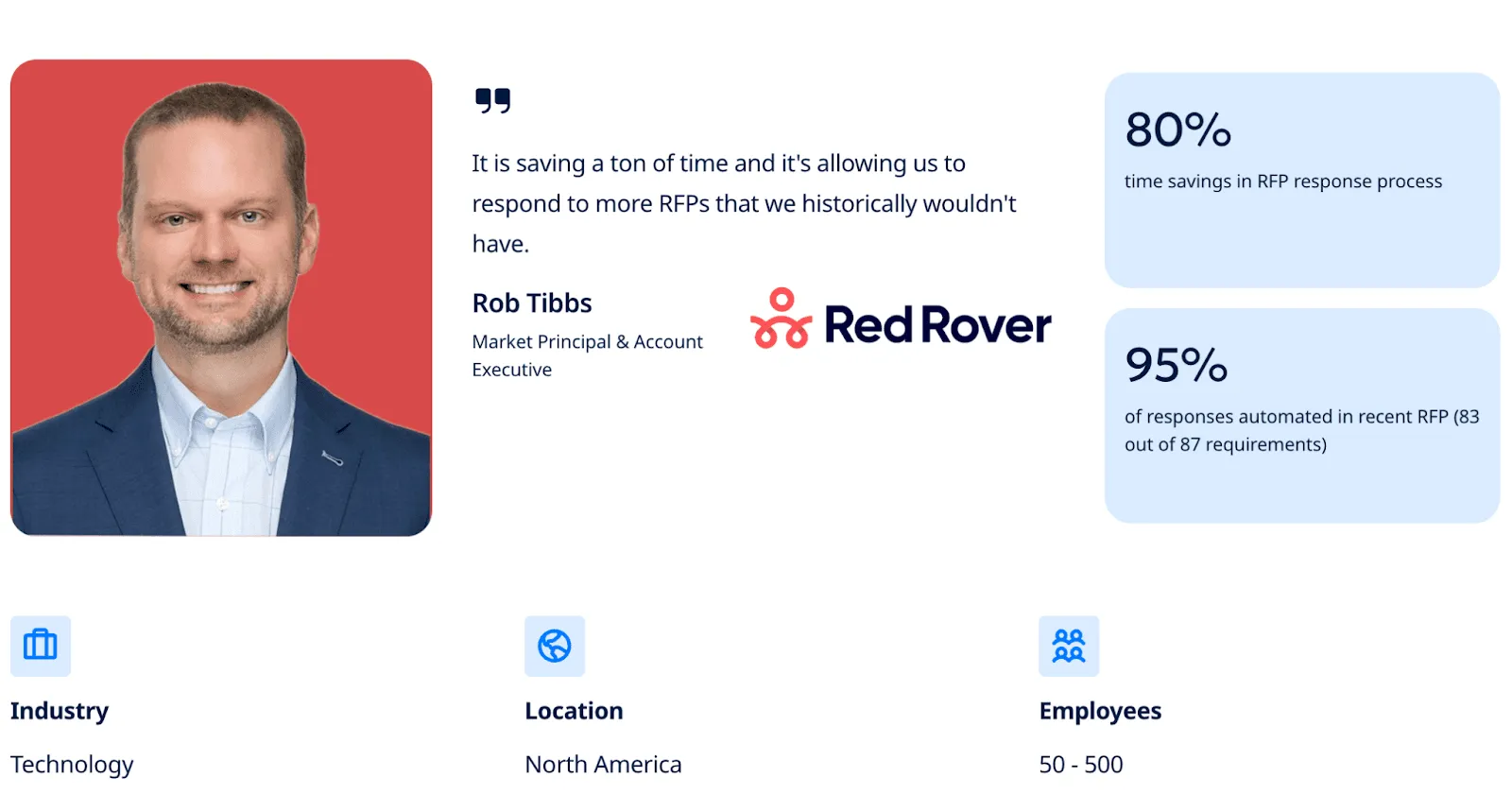
Red Rover’s lean proposal team was spending excessive time on repetitive RFP questions. By automating their RFP response process and using AutoRFP.ai, they built a workflow centered on automated first-draft generation.
Their new process automatically populated 95% of standard questions from their content library, allowing the team to focus on personalizing responses and competitive positioning. The 80% time savings they witnessed further enabled the team to pursue more RFP opportunities with the same headcount.
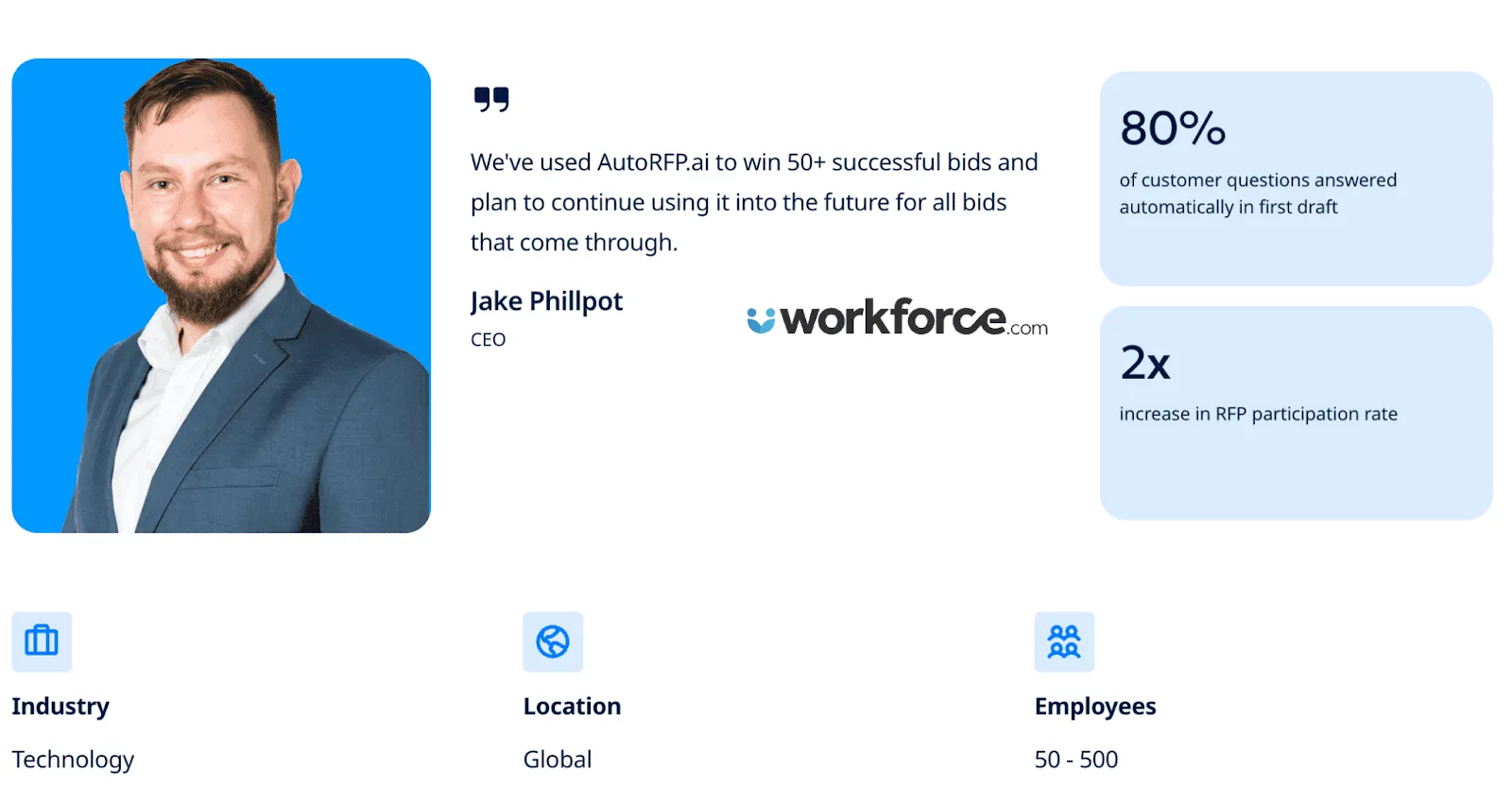
Workforce.com
Workforce.com struggled to respond to a growing number of RFPs while maintaining high-quality responses across their diverse product portfolio. After optimizing processes and implementing AutoRFP.ai, they won 50+ successful bids.
Their optimized process enabled them to get accurate and consistent drafts in seconds as opposed to days. They were also able to respond in over 50 languages, increasing global reach. These efficiency gains allowed them to double their RFP response rate while maintaining quality standards.
Common Mistakes and Pitfalls to Avoid
Even seasoned proposal teams can fall into predictable traps that hurt RFP success. Identifying and addressing these common mistakes can greatly boost win rates.
Pursuing Every RFP Without Qualification
The biggest mistake teams make is treating every RFP as an opportunity worth pursuing. Without a go/no-go process, you waste valuable resources on proposals you have little chance of winning.
Consider factors like competitive positioning, relationship strength, strategic fit, and realistic win probability before you start responding to RFPs. Refer to the table below to help with evaluation.
| Factor | Red Flag | Yellow Flag | Green Flag |
|---|---|---|---|
| Solution fit | <60% match | 60-80% match | >80% match |
| Strategic value | Low revenue, no strategic fit | Moderate revenue and strategic fit | High revenue and strategic alignment |
| Win probability | <20% | 20-50% | >50% |
Providing Generic, Non-Customized Responses
Prospects can instantly tell copy-pasted responses that don’t address their specific needs. While leveraging your content library is essential for efficiency, every response must be personalized to show understanding of the prospect’s challenges, and goals. Generic responses simply signal lack of effort.
Neglecting Formatting and Presentation
Content quality matters, but so does presentation. Poorly formatted proposals with inconsistent styling, grammatical and spelling errors, and no visuals create a forgetful impression regardless of content quality.
Prospects review multiple proposal responses and if your formatting is not up to the mark of your competitors, you will simply be put in the rejection pile.
Transform Your RFP Response Process with Automation
The battle for RFP excellence is no longer won through manual effort alone. Smart teams are leveraging automation to respond to more RFPs (34 more annually on average), while simultaneously improving quality and reducing stress.
By implementing the seven-step process outlined above and supporting it with the right RFP automation tools, you can transform your RFP response process from a drain on resources to a competitive advantage that drives significant revenue growth.
Don’t let another opportunity slip through the cracks because of an inefficient process. Take control of your RFP response management today.
Ready to revolutionize your RFP response process? AutoRFP.ai helps teams win more deals with higher-quality responses in a fraction of the time. Book Demo today to see how our AI-powered platform can transform your approach to RFPs.
